
Are you a restaurant owner staring at empty tables on a weeknight? You pour your heart into every dish, but a few unfair online reviews are poisoning your reputation. The phone isn't ringing, online reservations are slow, and the constant worry about filling seats is becoming unbearable. It feels like you're invisible, and your hard work isn't paying off.
You're not just cooking food; you're running a business, and right now, bad reviews are costing you customers and revenue. This isn't just a marketing problem; it's a survival problem. But what if there was a clear path to turn this around, one that puts you back in control? At Review Overhaul, we've guided hundreds of restaurant owners just like you out of this exact struggle.
Imagine having a simple, 3-step plan that not only fixes your online reputation but turns your happy customers into a powerful marketing force. This guide isn't a long list of confusing tasks. It's a clear blueprint to solve your most pressing problem: attracting more customers. You'll see your Google rating climb, reservations increase, and feel the relief of a consistently busy restaurant. Success means a better reputation driving more sales, giving you the growth and peace of mind you deserve.
1. Develop a Strong Google My Business Profile
Think of your Google Business Profile (GBP) as your restaurant's digital front door. For a restaurant owner, it's often the very first impression a potential customer has of your business. This isn't just another online listing; it’s the cornerstone of all your local restaurant marketing tips and the primary tool for managing your online reputation.
When a hungry customer searches "sushi near me," a complete, photo-rich, and highly-rated GBP is what makes them choose you over the competition. It’s where they see your menu, check your hours, read reviews, and get directions. Ignoring it is like locking your front door during business hours. A fully optimized profile is your first line of defense against bad reviews and your most powerful tool for attracting local foot traffic directly from Google.
How to Make Your Profile Shine
Making your GBP a customer magnet is easier than you think. The key is consistency and providing all the information a potential diner needs to make a decision.
- Complete Every Section: Fill out 100% of your profile. This includes services, attributes (like "outdoor seating" or "good for kids"), accessibility information, and your menu. The more complete it is, the better Google understands your business and the more it will show your profile to relevant searchers.
- Upload High-Quality Photos Weekly: Don't just set it and forget it. Add new, mouth-watering photos of your dishes, your welcoming interior, and your happy staff every week. This shows Google your profile is active and gives customers a fresh, appealing look at what you offer.
- Engage with Reviews and Q&As: Respond to every single review, both positive and negative, within 24 hours. A professional, empathetic response to criticism can turn a negative into a positive. Likewise, promptly answer questions in the Q&A section to show you’re an engaged and helpful owner. This level of detail is a crucial part of a strong local SEO strategy.
- Use Google Posts: Share updates about daily specials, upcoming events, or holiday hours using the Google Posts feature. These posts appear directly in your profile on search results and give customers a timely reason to visit.
2. Implement Email Marketing Campaigns
Think of email marketing as your direct line to your most loyal customers. For a restaurant owner, it’s a powerful way to bypass the noise of social media and speak directly to people who already love what you do. This isn't just about sending spam; it’s about building a community and giving your regulars compelling reasons to come back again and again. It remains one of the highest ROI marketing channels available.
When a customer is deciding where to eat, a timely email with a mouth-watering special can make that decision for them. It’s where they learn about your new seasonal menu, get exclusive discounts, and feel like a valued insider. Neglecting email is like forgetting to tell your regulars about your "two-for-one" special. A well-managed email list is your secret weapon for driving repeat business and turning one-time visitors into lifelong fans.
How to Build a Winning Email Strategy
Turning your email list into a revenue-generating machine is all about providing value. The key is to treat your subscribers like VIPs, giving them content and offers they can’t find anywhere else.
- Build Your List Organically: Offer a clear incentive for signing up, like 10% off their next meal or a free appetizer. Place sign-up forms on your website, at the bottom of receipts, and with a simple QR code on your tables. Never buy a list; an engaged audience is built, not bought.
- Segment Your Audience: Don't send the same message to everyone. Group your subscribers by their behavior, for instance, "weekend diners," "takeout regulars," or "new customers." This allows you to send highly targeted promotions, like a lunch special to your weekday crowd, that are much more likely to convert.
- Craft Compelling Emails: Use a clear, enticing subject line that announces the value upfront (e.g., "This Weekend Only: BOGO Pizza!"). Fill the email with high-quality photos of your food and keep the text short and to the point. Aim for one or two promotional emails per week at most to avoid fatigue.
- Test and Optimize: Experiment with different send times to see when you get the most opens and clicks. Pay attention to what kinds of offers perform best. Every email is a chance to learn more about what motivates your customers, making this one of the most insightful restaurant marketing tips you can implement.
3. Develop a Strong Google My Business Profile
Think of your Google Business Profile (GBP) as your restaurant's digital front door. For a restaurant owner, it's often the very first impression a potential customer has of your business. This isn't just another online listing; it’s the cornerstone of all your local restaurant marketing tips and the primary tool for managing your online reputation.
When a hungry customer searches "tacos near me," a complete, photo-rich, and highly-rated GBP is what makes them choose you over the competition. It’s where they see your menu, check your hours, read reviews, and get directions. Ignoring it is like locking your front door during business hours. A fully optimized profile is your first line of defense against bad reviews and your most powerful tool for attracting local foot traffic directly from Google.
How to Make Your Profile Shine
Making your GBP a customer magnet is easier than you think. The key is consistency and providing all the information a potential diner needs to make a decision.
- Complete Every Section: Fill out 100% of your profile. This includes services, attributes (like "outdoor seating" or "good for kids"), accessibility information, and your menu. The more complete it is, the better Google understands your business and the more it will show your profile to relevant searchers.
- Upload High-Quality Photos Weekly: Don't just set it and forget it. Add new, mouth-watering photos of your dishes, your welcoming interior, and your happy staff every week. This shows Google your profile is active and gives customers a fresh, appealing look at what you offer.
- Engage with Reviews and Q&As: Respond to every single review, both positive and negative, within 24 hours. A professional, empathetic response to criticism can turn a negative into a positive. Likewise, promptly answer questions in the Q&A section to show you’re an engaged and helpful owner. This level of detail is a crucial part of a strong local SEO strategy.
- Use Google Posts: Share updates about daily specials, upcoming events, or holiday hours using the Google Posts feature. These posts appear directly in your profile on search results and give customers a timely reason to visit.
4. Create Valuable Content Marketing
Content marketing is about more than just posting food photos; it’s about telling your restaurant's story in a way that builds a loyal community. This isn't just advertising; it's the process of creating valuable, relevant content like blog posts, videos, and guides that educate and engage potential customers. Think of it as inviting diners into your kitchen before they ever step through the door.
When a potential customer searches for "best brunch recipes" or "the story behind Neapolitan pizza," your content can be the answer they find. By establishing your restaurant as a knowledgeable authority, you build trust and attract organic traffic over time. This approach transforms you from just another place to eat into a go-to resource for food lovers, making you the obvious choice when they're ready to dine out.
How to Serve Up Great Content
Creating compelling content is about sharing your passion and expertise. The goal is to give your audience a reason to connect with your brand beyond just the menu.
- Start a Restaurant Blog: You don't need to be a professional writer. Share the story behind a signature dish, interview your head chef, or create a guide to wine pairings. Aim for 2-4 posts per month to build momentum and show Google your website is a hub of fresh information.
- Create Enticing Video Content: Video is king on social media. Film a short, behind-the-scenes look at your kitchen, a quick-tip cooking video from your chef, or a story about the local farm where you source your ingredients. Videos generate significantly higher engagement and are easily shareable.
- Target Local and Niche Keywords: Focus on topics relevant to your audience. A farm-to-table restaurant could write about "seasonal ingredients in [Your City]," while a pizzeria might create content around "the history of sourdough in [Your Neighborhood]." This helps you capture highly relevant search traffic. As you build out content, consider how people find you through voice assistants, a key part of optimizing for voice search.
- Repurpose and Promote: Don't let great content sit on your blog. Turn a blog post into a series of Instagram stories, a video into a short GIF for Twitter, and an in-depth guide into an email newsletter exclusive. This maximizes your reach without creating new content from scratch. For more advanced targeting, learn about email segmentation strategies and how they can drive growth by sending relevant messages to different customer groups.
5. Implement a Loyalty Program
Think of your loyalty program as a formal invitation for customers to become part of your restaurant's family. For a restaurant owner, it’s the single most effective way to turn a first-time visitor into a lifelong regular. This isn't just about handing out punch cards; it’s a strategic system for rewarding repeat business and gathering crucial data to better serve your most valuable patrons.
When a customer has a great meal, a loyalty program is what encourages them to return next week instead of trying your competitor down the street. It’s the mechanism that makes them feel appreciated and valued beyond their transaction. Ignoring this is like telling your best customers you don’t care if they come back. A well-designed program is one of the most direct and measurable restaurant marketing tips for increasing customer lifetime value and building a dedicated community around your brand.
How to Build a Program That Sticks
Creating a loyalty program that customers actually use is all about simplicity, value, and seamless integration. The goal is to make participation feel effortless and the rewards feel genuinely worthwhile.
- Keep It Simple and Achievable: The rules should be easy to understand in seconds. Whether it’s "buy nine coffees, get the tenth free" or a points-based system, customers must instantly grasp how to earn and redeem. Make the first reward relatively easy to achieve to create early momentum.
- Offer Meaningful Rewards: A free soft drink might not be enough to change behavior. Offer rewards people truly want, like a free entrée, a significant discount on their next bill, or exclusive access to a new menu item. The reward must feel more valuable than the effort required to earn it.
- Integrate with Your POS System: The most successful programs are frictionless. Integrating your loyalty program directly with your point-of-sale system allows for automatic tracking, eliminating the need for customers to carry a physical card or remember a phone number. This also provides you with powerful data on customer spending habits.
- Promote It Everywhere: Your staff should be trained to mention the loyalty program to every customer at checkout. Use table tents, window decals, and mentions on your menu and social media to ensure every customer knows about the benefits of signing up.
6. Partner with Influencers and Food Bloggers
Think of local food bloggers and influencers as your restaurant's most trusted ambassadors. For a restaurant owner, these individuals offer a direct line to an engaged, food-loving audience that already trusts their recommendations. This isn't just about paying for a post; it's about building authentic relationships that generate credible social proof and word-of-mouth marketing at scale.
When a respected local food creator shares a video of your signature pasta dish or raves about your weekend brunch, their followers listen. This kind of collaboration can introduce your brand to thousands of potential customers who might never have found you otherwise. Ignoring influencer marketing means missing out on one of the most powerful and modern restaurant marketing tips for building buzz and driving new foot traffic through your doors.
How to Build Winning Partnerships
Finding the right influencers and structuring a successful collaboration is key. The goal is authentic content that feels like a genuine recommendation, not a forced advertisement.
- Focus on Local Micro-Influencers: Start with creators who have between 10,000 and 100,000 followers in your specific city or region. Their audiences are often more engaged and their rates are more affordable, offering a higher return on investment for a local business.
- Prioritize Authenticity Over Praise: Instruct influencers to provide an honest, authentic review. Modern audiences can spot a disingenuous ad from a mile away. A real, balanced perspective builds more trust than a post that is purely positive.
- Provide Creative Freedom with Clear Goals: Give influencers clear guidelines about what you want to promote, such as a new menu item or a weekend special. However, allow them the creative freedom to present it in their own unique style. This ensures the content resonates with their specific audience.
- Track Your ROI: Provide your influencer partners with a unique discount code or a special link for online ordering. This allows you to directly track the number of customers and the amount of revenue their collaboration generated for your restaurant.
7. Optimize for Online Ordering and Delivery
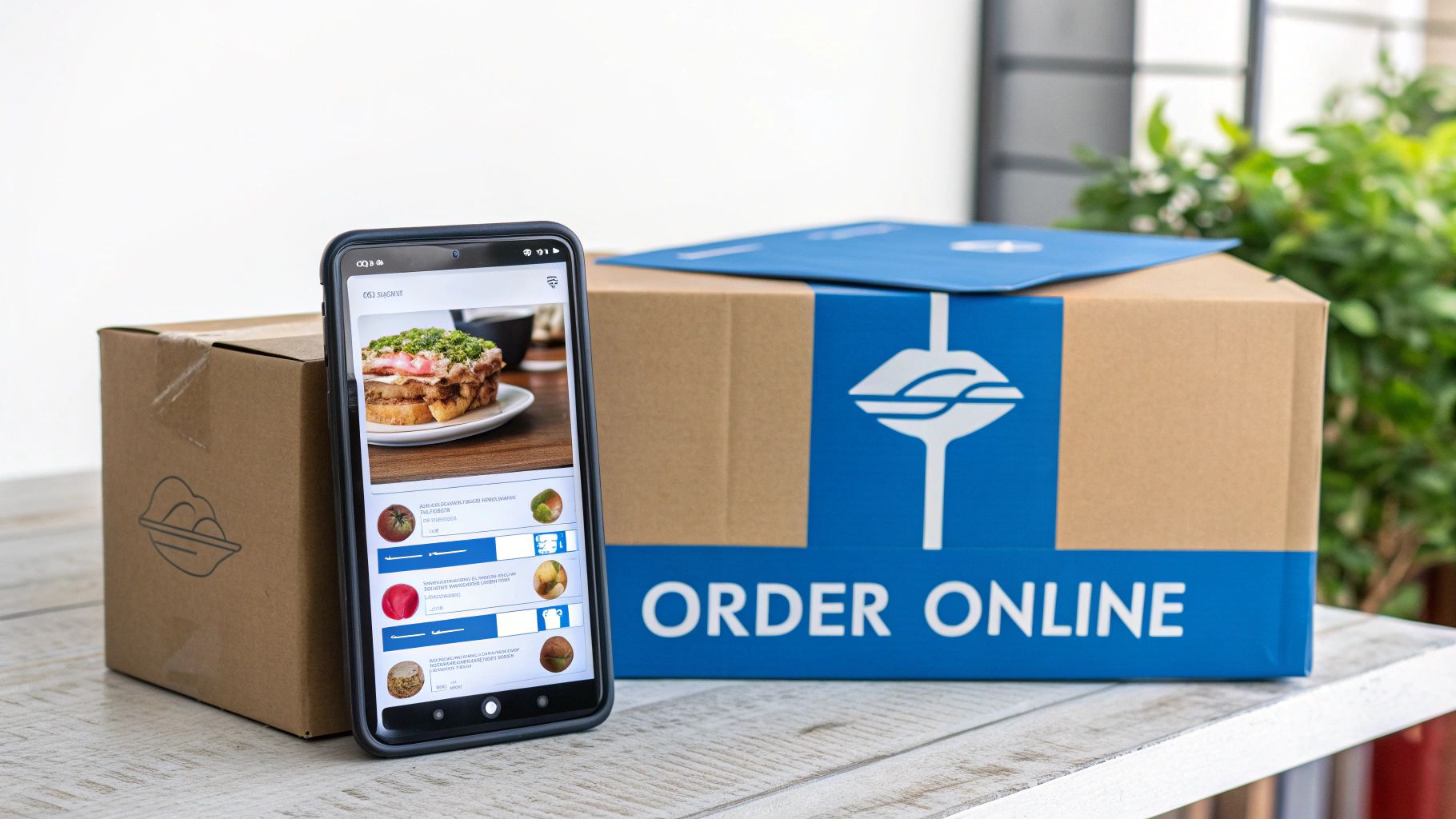
In today's dining landscape, your online ordering and delivery system is just as important as your physical dining room. For many customers, the convenience of ordering from home isn't just a perk; it's a primary factor in deciding where to eat. This shift makes optimizing your digital storefront one of the most critical restaurant marketing tips you can implement.
If a potential customer can't easily find you on DoorDash or navigate your website to place an order, you're losing a significant revenue stream. From large chains like Chipotle to the local pizzeria, a seamless delivery experience is essential for growth. Failing to adapt means handing customers directly to your competitors who have already mastered the digital ordering game.
How to Master Your Delivery Game
Turning your delivery operation into a well-oiled machine involves strategic planning across platforms, menus, and customer experience. The goal is to make ordering from you effortless and reliable.
- Be Everywhere Your Customers Are: Ensure your restaurant is listed and optimized on major third-party platforms like Uber Eats, Grubhub, and DoorDash. Consistency in your name, address, and menu across these services is key, which is a core part of an effective local business listing management strategy.
- Create a Delivery-Friendly Menu: Not all dishes travel well. Design a specific menu with items that maintain their quality and temperature during transit. Optimize these items for higher margins to help offset hefty third-party commission fees.
- Protect Your Food Quality: Invest in high-quality, durable packaging that prevents spills and keeps food at the right temperature. The delivered meal is a direct reflection of your restaurant's standards, so make sure it arrives looking and tasting great.
- Offer Delivery-Exclusive Promotions: Encourage online orders by creating special deals or bundles available only through delivery or your website. This can build a loyal base of at-home diners and drive repeat business.
8. Leverage Paid Advertising (PPC and Social Ads)
Think of paid advertising as the express lane to getting in front of hungry customers. While organic strategies like SEO build momentum over time, paid ads deliver immediate visibility, placing your restaurant directly in front of people actively searching for a place to eat or those who fit your ideal customer profile. This isn't about just throwing money at ads; it's a calculated restaurant marketing tip for capturing high-intent diners at the exact moment they're making a decision.
When someone searches "best tacos downtown" or scrolls through Instagram looking for weekend brunch spots, a targeted ad can be the deciding factor that brings them to your door instead of a competitor's. It allows you to jump the line, test offers quickly, and get measurable results, making it an essential tool for driving reservations, online orders, and foot traffic. A well-managed ad campaign is a powerful engine for predictable growth.
How to Make Your Ads Profitable
Running successful paid ads is about precision targeting and compelling creative. The goal is to reach the right people with the right message at the right time, ensuring your ad spend turns into real revenue.
- Define Clear, Measurable Goals: Before you spend a dime, decide what you want to achieve. Is it more online reservations through your website, a boost in delivery orders, or promoting a new menu item? Having a clear goal dictates your strategy and allows you to measure success.
- Use High-Quality Visuals: On platforms like Facebook and Instagram, your food is the star. Use professional, mouth-watering photos and short, engaging videos of your dishes and ambiance. Your ad creative needs to stop scrollers in their tracks and make them hungry.
- Target with Geographic Precision: Don't waste money advertising to people who are too far away. Use geo-fencing to target users within a specific radius of your restaurant or even those visiting nearby attractions or competitors. This focuses your budget on the most likely customers.
- Leverage Different Platforms for Different Goals: Use Google Ads to capture high-intent searches like "Italian restaurant near me." Use Facebook and Instagram for building brand awareness, running promotions, and reaching specific demographics and interests. For restaurants looking to specifically target a culinary audience, resources dedicated to finding food influencers for partnerships can be invaluable.
9. Build Community Through Events and Collaborations
Your restaurant is more than just a place to eat; it's a potential hub for your community. Hosting special events and collaborating with other local businesses transforms your space into a gathering place, creating memorable experiences that people will talk about long after the plates are cleared. This is where you move beyond simple transactions and start building genuine relationships.

When you create an event, you're not just selling food; you're selling an experience. A themed dinner, a chef's tasting menu, or a pop-up supper club generates excitement and powerful word-of-mouth marketing. These unique offerings attract new customers, give regulars a fresh reason to return, and create fantastic photo opportunities that will flood social media. The buzz from a single well-executed event can significantly boost your restaurant's profile and reputation.
How to Create Unforgettable Experiences
Turning your restaurant into an event destination is about creativity and strategic planning. The goal is to create exclusive, high-value experiences that align perfectly with your brand.
- Partner with Local Businesses: Collaborate with a local brewery for a beer-pairing dinner, a nearby farm for a farm-to-table tasting menu, or a local artist for a gallery night. These partnerships introduce your brand to a new audience and strengthen community ties.
- Create Exclusive, Themed Nights: Host a "Chef's Table" with limited seating, a seasonal wine-tasting event, or a cooking class taught by your head chef. Scarcity and exclusivity can drive demand and allow for premium pricing.
- Promote Heavily Across All Channels: Announce your event on your Google Business Profile, send out an email blast to your list, and create a countdown on social media. Use high-quality visuals and compelling copy to build anticipation.
- Document and Share Everything: During the event, take plenty of photos and videos. This content is marketing gold for future promotions and showcases the vibrant atmosphere of your restaurant. This is a key part of your online reputation management for restaurants as it highlights positive, real-world customer experiences.
10. Encourage and Manage Online Reviews
Your online reviews are the modern-day word-of-mouth referral, and they are mission-critical for your restaurant's survival. Think of them as a public report card that every potential diner checks before deciding where to eat. A steady stream of positive reviews builds immense social proof and directly influences your ranking in local search results, making it one of the most vital restaurant marketing tips on this list.
When a customer sees a 4.7-star rating next to your name versus a competitor's 3.5 stars, the choice becomes easy. Consistently managing this feedback shows that you care about the customer experience and are actively engaged with your community. Ignoring reviews, especially negative ones, sends a signal of indifference and can quickly tarnish your reputation, costing you countless customers.
How to Build a 5-Star Reputation
Actively managing your online reputation isn't passive; it requires a proactive and consistent strategy. The goal is to encourage happy customers to share their experiences while professionally handling any criticism that comes your way.
- Actively Ask for Reviews: Don't wait for reviews to happen organically. Train your staff to ask satisfied customers to leave a review. You can also follow up with customers via email or text, providing a direct link to your Google or Yelp page to make it as easy as possible.
- Respond to Every Single Review: Aim to reply to all reviews, good and bad, within 24 hours. Thank positive reviewers for their kind words. For negative feedback, respond empathetically, apologize for their experience, and offer to make things right offline. This shows accountability.
- Use Feedback for Improvement: Treat every review as a valuable piece of operational feedback. If multiple customers mention slow service or a specific dish being cold, you've identified a real problem that needs fixing. Use this data to improve your restaurant from the inside out.
- Centralize Your Efforts: Monitoring Yelp, Google, TripAdvisor, and other platforms can be overwhelming. A robust review management strategy often involves using tools to consolidate all your reviews in one place, ensuring no customer feedback ever slips through the cracks.
10-Point Comparison of Restaurant Marketing Tips
| Strategy | Implementation complexity | Resource requirements | Expected outcomes | Ideal use cases | Key advantages |
|---|---|---|---|---|---|
| Leverage Social Media Marketing | Moderate — ongoing content & community management | Content creators, social manager, modest ad spend | Increased visibility, engagement, brand loyalty; ROI varies | Visual menus, promotions, trend participation | Cost-effective, high engagement, real-time feedback |
| Implement Email Marketing Campaigns | Moderate — systems & segmentation setup | Email platform, list-building, copy/design, analytics | High ROI, repeat visits, measurable conversions | Promotions, loyalty communication, reservation reminders | Direct, personalized, highly trackable |
| Develop a Strong Google My Business Profile | Low — setup & regular updates | Time for optimization, photos, review monitoring | Improved local search visibility, more calls/visits | Local discovery, drive foot traffic, hours/menus | Free, high local impact, builds trust |
| Create Valuable Content Marketing | High — consistent production and SEO | Writers/videographers, SEO, time, editing resources | Long-term organic traffic, authority, shareable assets | Brand building, SEO, storytelling, niche expertise | Sustained traffic, credibility, repurposable content |
| Implement a Loyalty Program | Medium–High — tech & program design | POS/CRM integration, rewards budget, staff training | Increased customer lifetime value and retention | High-frequency businesses, repeat customers | Drives repeat visits, captures customer data |
| Partner with Influencers and Food Bloggers | Moderate — outreach & relationship management | Partnership budget, PR/outreach time, content coordination | Expanded reach and trusted endorsements | New openings, niche targeting, menu launches | Authentic amplification, access to engaged audiences |
| Optimize for Online Ordering and Delivery | Medium–High — operations & tech integration | Delivery platform fees, packaging, order management systems | Increased off-premise revenue, broader reach | High delivery demand markets, takeout-heavy service | Captures delivery market, adds convenience |
| Leverage Paid Advertising (PPC and Social Ads) | Moderate — campaign setup & optimization | Ad budget, targeting expertise, creative assets | Immediate visibility, targeted traffic, measurable ROI | Promotions, local targeting, new openings | Fast results, precise targeting, scalable |
| Build Community Through Events and Collaborations | High — planning, logistics, promotion | Event staff, partners, promotion budget, permits | Strong word-of-mouth, deeper community ties | Special experiences, local partnerships, PR boosts | Memorable experiences, community engagement, content |
| Encourage and Manage Online Reviews | Low–Moderate — process and monitoring | Review tools, staff time for responses, training | Improved reputation, higher local rankings, trust signals | Local reputation building, crisis response, SEO | High impact at low cost, influences customer decisions |
Your Simple 3-Step Plan to a Full Restaurant
You, the passionate restaurant owner, are the hero of this story. Your problem is clear: bad reviews and a weak online presence are costing you customers. But you don't need a hundred different marketing tactics; you need a simple plan that works. As your guide, Review Overhaul is here to give you that plan.
Follow This 3-Step Plan
Step 1: Fix Your Digital Front Door
Your Google Business Profile is where 90% of your new customers will find you. We'll help you optimize every section, from photos to your menu, to ensure you make an amazing first impression.
Step 2: Turn Reviews into a Superpower
A steady stream of 5-star reviews is your best marketing tool. We'll implement a simple system to encourage your happy customers to leave reviews, turning your reputation into a magnet for new diners.
Step 3: Keep Your Customers Coming Back
Once you've won a customer, we'll help you keep them. Through simple email and social media strategies, you can build a loyal community that chooses you every time.
Imagine seeing a 4.8-star rating on Google and a reservation book that's full every night. A family-owned pizzeria we worked with saw a 40% jump in online orders after implementing this exact plan. This success isn't a fantasy; it’s the result of having the right guide and a clear plan.
You can continue losing customers to your competitors, or you can take the first step toward growth and peace of mind. Stop letting bad reviews define your business.
Show Me the Problem
