
Client testimonials are one of the most effective tools for building trust and attracting new clients in the legal field. With 98% of potential clients reading online reviews before contacting a law firm, showcasing positive client feedback can make a significant difference. Profiles with testimonials see a 370% increase in engagement, highlighting their importance in a competitive market.
Here’s what you’ll learn in this guide:
- Why testimonials matter: 79% of consumers trust online reviews as much as personal recommendations, and 40% say strong reviews influence their choice of legal services.
- Compliance essentials: Follow FTC and state bar rules to avoid fines or disciplinary actions. Always get written consent and include disclaimers.
- How to ask for testimonials: Timing is key – ask during the "gratitude window" after a successful case. Use specific questions to get detailed, meaningful feedback.
- Where to display testimonials: Showcase them on your website, Google Business Profile, legal directories, and social media for maximum impact.
- Tools to simplify the process: Platforms like Review Overhaul can automate requests, manage feedback, and ensure compliance.
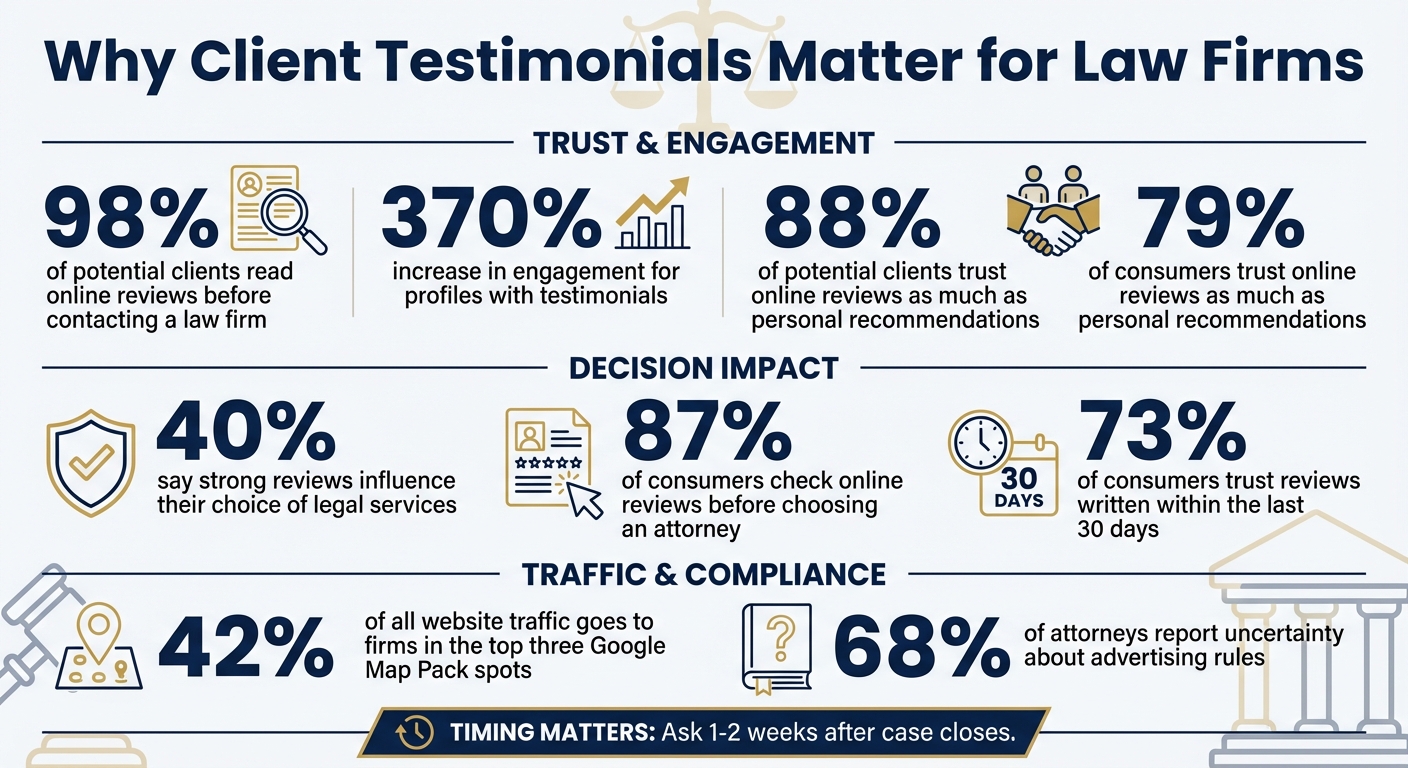
Client Testimonials Impact Statistics for Law Firms
Law Firm Marketing Strategies: Using Testimonials to Attract Clients
Effective testimonials are a cornerstone of law firm reputation management, helping you build the necessary trust to convert prospects into clients.
sbb-itb-50c3429
Legal and Ethical Rules for Client Testimonials
Before gathering client testimonials, it’s crucial to understand the legal and ethical guidelines that govern their use. For attorneys, two main sets of rules apply: the Federal Trade Commission (FTC) guidelines for consumer protection and the state bar ethics rules that regulate attorney advertising. Ignoring these rules can lead to fines, disciplinary actions, or even license suspension.
State Bar and FTC Rules for Testimonials
The FTC’s Rule on Consumer Reviews and Testimonials, effective October 21, 2024, strictly prohibits practices like purchasing fake reviews, intimidating clients to suppress negative feedback, or misrepresenting controlled review platforms as independent sources. For lawyers, this means no paying for glowing reviews or using legal threats to remove unfavorable but legitimate feedback.
State bar rules, such as the ABA Model Rule 7.1, require all communications to be truthful and not misleading. The New York State Bar Association highlights this in its guidelines:
"A website advertisement that uses client testimonials or reports of past results is prohibited… if the advertisement creates unjustified expectations, contains insufficient information, or is otherwise false, deceptive or misleading."
Confidentiality is another key consideration. Under Rules 1.6 and 1.9, attorneys must obtain informed consent before sharing any details about a client’s case or identity. This means you cannot post a testimonial that mentions case specifics unless the client has provided written permission.
Some states go a step further. For instance, New Jersey requires testimonials to come from "an identifiable person who actually received the services", with at least their initials or name included. Additionally, many jurisdictions discourage using comparative language like "the best lawyer" or "top attorney", as such claims are difficult to substantiate.
Disclaimers are also a must. Statements like "Results may vary depending on your particular facts and legal circumstances" or "Prior results do not guarantee a similar outcome" should be included to manage expectations. The FTC mandates that these disclaimers be clear and impossible to miss.
Common Compliance Errors to Avoid
Even with guidelines in place, 68% of attorneys report uncertainty about advertising rules. This often leads to mistakes.
One common misstep is offering incentives for reviews. While New York allows small gifts – like a $50 gift card – for providing a review, the gift cannot depend on the feedback being positive. In contrast, Florida prohibits any form of payment for testimonials. The FTC emphasizes that incentives should reward the act of writing a review, regardless of its content.
Another frequent error involves breaching confidentiality when responding to reviews. Even when replying to positive feedback, avoid confirming an attorney-client relationship or revealing case details. Instead, stick to neutral responses like, "We appreciate your feedback."
Using software to filter out unhappy clients – known as review gating – is another violation. This practice breaches both Google’s Business Profile policies and FTC guidelines. Editing testimonials or suppressing negative feedback is equally deceptive.
Florida imposes an additional restriction: lay clients (non-lawyers) are deemed unqualified to assess a lawyer’s technical abilities. As Michelle Calcote King, Principal & President of Reputation Ink, explains:
"In Florida, ‘lay’ (non-lawyer) clients are considered unqualified to make statements about a lawyer’s skills as a lawyer."
Instead, testimonials in Florida should focus on qualities like responsiveness, communication, and professionalism rather than technical expertise.
How to Get Client Consent Properly
Verbal consent isn’t enough – written authorization is critical to protect yourself from bar complaints or legal disputes. A consent form should outline where the testimonial will appear (e.g., website, social media, print materials), how long it will be used, and whether the client’s name or photo will be included.
Wait at least 30 days after a case concludes before requesting a testimonial. This waiting period gives clients time to reflect on their experience and ensures they provide consent without feeling pressured.
Your consent form should also include a confidentiality waiver explaining what information will be shared and any edits you plan to make. Always give clients the option to remain anonymous, especially for sensitive legal matters, and inform them of their right to revoke consent and have their testimonial removed. This approach ensures transparency and builds trust.
How to Request Client Testimonials
When to Ask for Testimonials
The best time to ask for a testimonial is during the "gratitude window" – that moment when a client expresses satisfaction with your work. This often happens at the conclusion of a case or during a final meeting.
For many practice areas, the closing of a case is ideal. Defense and transactional attorneys often include this step as part of their standard file-closing process. Start by casually asking if the client would be open to providing feedback. If they agree, follow up with more specific questions. Focus on clients with successful outcomes or those who have worked with you multiple times to ensure meaningful and high-quality testimonials.
Timing your request thoughtfully helps set the tone for a personalized and effective approach.
Effective Ways to Make the Request
Once you’ve nailed the timing, the next step is to ask in a way that encourages thoughtful and detailed responses.
Instead of simply asking for a review, guide clients with 3 to 5 specific questions. For example, ask:
- "What were your biggest concerns before hiring us?"
- "How did we help resolve your issue?"
- "What would you say to someone considering our services?"
This approach leads to more engaging, story-driven testimonials rather than generic comments. Personalize your request by referencing key moments or milestones in their case. In-person requests during meetings often yield the best results, but email is a great alternative for convenience. Text messages can also be effective for quick star ratings or short feedback.
Make the process simple by providing direct links to platforms like your Google Business Profile. For sensitive cases, offer clients the option to stay anonymous by using initials, first names, or even generic descriptors like "Family Law Client." If a client agrees but doesn’t follow through, a single follow-up reminder can help without being intrusive.
Email Templates for Testimonial Requests
When requesting testimonials via email, keep the tone respectful and direct while including elements that make it easy for clients to respond.
Here’s an example of how to structure your email:
Subject Line:
"Would you share your experience with [Law Firm Name]?"
Body:
Start by acknowledging their case outcome and thanking them for their trust. Then, politely ask if they’d be willing to share their experience. Include a few guiding prompts, such as:
- "What challenge were you facing before working with us?"
- "What did you value most about our communication?"
- "What results have you experienced?"
Give clients options to submit their feedback in a format they’re comfortable with – whether that’s a written testimonial, a video, or a short quote. Be sure to include a clear consent statement, like:
"By submitting your testimonial, you authorize [Law Firm Name] to use your comments for marketing purposes, including on our website and social media."
Also, let them decide how they want their testimonial attributed – full name, initials, or anonymous. End the email with a direct link to your review platform and a clear call-to-action, like:
"Click here to share your experience."
For clients who’ve already praised your work during a call, consider sending a follow-up email right after to capture their comments while they’re fresh.
Tools for Collecting Client Testimonials
Once you’ve mastered asking for testimonials, the next step is to make their collection as smooth as possible. Using the right software tools can simplify this process dramatically. Automation not only saves time but also ensures that you consistently gather client feedback. Considering that 98% of potential clients read online reviews before reaching out to a law firm, choosing the right tools can have a direct impact on your firm’s ability to attract new clients. These tools help you collect genuine, timely testimonials, which are essential for building trust in the legal field.
Review Overhaul for Legal Professionals
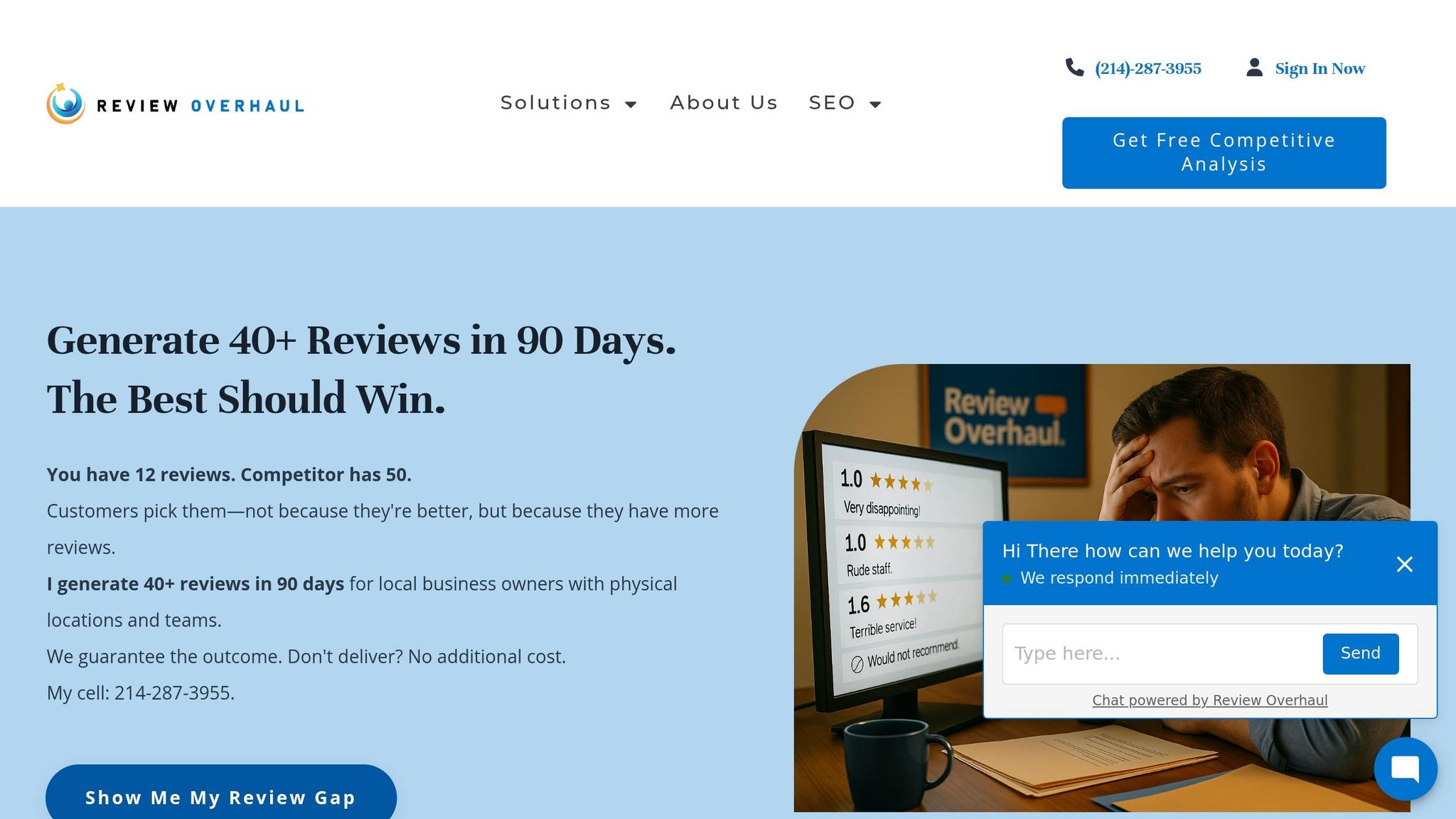
Review Overhaul is designed specifically for law firms, making it easier to generate and manage client testimonials across multiple platforms. The platform automates review requests via SMS and email, sending personalized messages at key moments – like right after a case wraps up or when a client expresses their satisfaction. This automation keeps your involvement minimal while ensuring steady feedback collection.
From a unified dashboard, you can monitor reviews across platforms like Google Business Profile, Avvo, Lawyers.com, and other directories. The tool’s AI-driven sentiment analysis helps you understand client feedback, while its automated response suggestions allow you to reply professionally without risking confidentiality. For firms handling sensitive matters, the platform includes a private feedback loop, giving unhappy clients a way to express concerns privately before leaving public reviews.
What to Look for in Testimonial Collection Tools
When evaluating tools, prioritize features that ensure security and compliance. Look for:
- Data encryption and multi-factor authentication to protect client information.
- Integration with your practice management software for a seamless workflow.
- Compliance with ethical guidelines, such as ABA Model Rules 7.1 and 7.2, and features to prevent "review gating", a practice banned by Google.
- Templates and built-in prompts that help you avoid confirming attorney-client relationships or disclosing sensitive details in public responses.
For efficiency, tools with CRM integration, automated follow-ups, and bulk contact import options are essential. Support for video testimonials is also a plus, as video reviews often feel more personal and credible than text alone. Finally, website widgets that display verified reviews directly on your service pages can enhance your firm’s online presence.
Make sure to evaluate these features based on your firm’s specific needs and budget.
Review Overhaul Pricing Plans
Choose a plan that fits your firm’s size and goals:
| Plan | Price | Key Features |
|---|---|---|
| Basic | $299/month | Single location, automated SMS/email review requests, managed responses, and website widgets |
| Professional | $399/month | Advanced AI sentiment analysis, keyword rank tracking, and social media monitoring |
| Premium | $499/month | Multi-location dashboard, location-specific strategies, priority support, and dedicated account management |
The Basic plan is ideal for solo attorneys or small firms just starting to grow their online presence. The Professional plan offers advanced analytics for firms looking to understand how reviews influence search rankings. For larger, multi-location practices, the Premium plan provides centralized management and tailored strategies to meet complex needs.
Where to Display Client Testimonials
Collecting testimonials is just the beginning. Where you showcase them can make or break their impact on potential clients. Placing testimonials where prospects naturally look for proof of your expertise is key.
Adding Testimonials to Your Law Firm Website
Your website is the cornerstone of your online presence, so make sure testimonials are front and center. A dedicated "What Clients Say" page is a great start, but don’t stop there. Feature testimonials on your homepage, practice area pages, and near contact forms to remind visitors of your credibility at critical moments. For instance, an auto-rotating carousel on your homepage can display multiple client stories without overwhelming the design. On practice area pages, tailor testimonials to match the specific services offered – like highlighting a review about compassionate guidance on your estate planning page.
"The right testimonial appearing near a contact form or offer can be a powerful motivator for potential clients." – Foster Consulting
You can also integrate short snippets into sidebars or footers, ensuring client feedback stays visible as visitors explore your site. Always, if possible, include the client’s name and location (with their permission) to make the testimonials feel more genuine. Thoughtfully placed testimonials not only build trust but also encourage visitors to take action.
Using Testimonials on Google Business Profile
Once your website is optimized with testimonials, expand their reach by featuring them on your Google Business Profile. This platform is a critical piece of the puzzle for improving local visibility. Google prioritizes businesses with consistent, recent reviews, which can boost your Map Pack ranking and drive more traffic. Reviews left directly on Google significantly influence its algorithm, which considers factors like relevance, distance, and prominence when ranking law firms. Firms in the top three Map Pack spots attract 42% of all website traffic.
To make the most of this, encourage clients to leave reviews regularly – Google rewards a steady flow of fresh feedback. When responding to reviews, mention specific services like "family law" or "personal injury" to subtly reinforce your expertise. Engaging with every review not only shows that your firm values client input but also signals to Google that your business is active and trustworthy.
Sharing Testimonials on Legal Directories and Social Media
Beyond your website and Google profile, expand the reach of your testimonials to legal directories and social media platforms. Posting client reviews on directories like Avvo, FindLaw, NOLO, and Martindale-Hubbell helps you connect with prospects actively searching for legal services. General platforms like Yelp, Facebook, and the Better Business Bureau also play a pivotal role – 87% of consumers check online reviews before choosing an attorney.
On social media, transform text testimonials into eye-catching graphics for platforms like LinkedIn, Facebook, Instagram, and X (formerly Twitter). Video testimonials can take it a step further, offering a more personal and relatable way for prospects to connect with real client experiences. A single strong review can be repurposed in multiple ways: as a quote on your website, a graphic for social media, or even a snippet in your email newsletters. This ensures your success stories reach a broad audience.
You can also incorporate testimonials into email campaigns, follow-up sequences, and online ads to boost click-through rates. When pitching new clients, include relevant client success stories in your proposals and presentations to highlight your expertise and track record. By diversifying where and how you share testimonials, you create a consistent reputation strategy across all platforms.
Conclusion
Client testimonials play a crucial role in building trust, especially in a field where 98% of potential clients read online reviews before contacting a law firm. These testimonials, when collected ethically and displayed effectively, serve as modern-day word-of-mouth referrals that heavily influence client decisions. In fact, 40% of consumers choose one legal provider over another based on strong reviews.
To maintain trust and comply with ethical standards, always obtain written consent for testimonials, steer clear of incentive-based reviews, and include clear disclaimers. Authenticity is key – 88% of potential clients trust online reviews as much as personal recommendations. By following these guidelines, you can protect both your professional reputation and your license to practice, while showcasing genuine client success stories.
Timing is just as important as compliance. The best time to request a testimonial is 1–2 weeks after a case closes, ideally during moments of peak gratitude, such as after a settlement check is received or a favorable verdict is delivered. Display these testimonials prominently on your website, Google Business Profile, and legal directories to maximize their visibility and impact.
Fresh testimonials carry more weight than sheer volume. With 73% of consumers trusting reviews written within the last 30 days, keeping a steady flow of recent feedback not only appeals to potential clients but also signals to Google’s algorithm that your firm is actively delivering results. By prioritizing these strategies, you can consistently strengthen client trust while staying on the right side of ethical guidelines.
FAQs
What disclaimer should I add to client testimonials?
To maintain ethical compliance, it’s important to include a clear disclaimer with testimonials. This disclaimer should state that the testimonials represent individual opinions and experiences, and they do not promise or guarantee specific results. Additionally, it’s crucial to mention that outcomes can vary depending on individual circumstances. Doing so helps set realistic client expectations and ensures alignment with legal marketing standards, reducing the risk of misunderstandings.
How can I respond to reviews without breaking confidentiality?
When replying to reviews, it’s crucial to prioritize ethics and confidentiality. Avoid including any sensitive or private details, and make sure you have the client’s written permission before sharing a testimonial. Aim for responses that are professional, express gratitude, and acknowledge feedback without mentioning specific case details or personal information. Keeping responses general and respectful helps uphold confidentiality and align with ethical practices.
What’s the safest way to collect testimonials across multiple platforms?
To collect testimonials responsibly, always prioritize client consent and adhere to ethical practices. Approach clients for feedback when they’re genuinely satisfied, using polite and non-intrusive methods such as personalized emails or surveys. It’s important to keep testimonials genuine, avoid revealing any private information, and secure written consent before sharing them publicly. You can also encourage clients to leave reviews directly on platforms like Google or your website. Finally, make it a habit to respond to all reviews – positive or negative – in a professional manner to uphold trust and openness.
