
Are you a restaurant owner pouring your heart and soul into your business, only to be crushed by a sudden one-star review? It feels like a punch to the gut. You're constantly putting out fires, dealing with inconsistent service, and watching those negative comments scare away new customers before they even walk in the door.
This isn't just about hurt feelings; it's about your bottom line. Those bad reviews and inconsistent experiences are costing you customers and revenue. But what if you could take back control and turn your team into your greatest asset?
Review Overhaul is your guide to transforming your restaurant's service. We provide a simple, 3-step plan to empower your team, delight your guests, and build a five-star reputation that drives sales. Imagine a future with fewer complaints, happier staff, and a dining room full of loyal regulars.
How Bad Service Is Quietly Costing You
Seeing a fresh one-star review pop up feels awful. You've poured everything into your restaurant, but inconsistent service makes it feel like you're losing control.
Those empty tables and stressed-out staff aren't just in your head. They are direct symptoms of not having a solid, repeatable training plan in place.
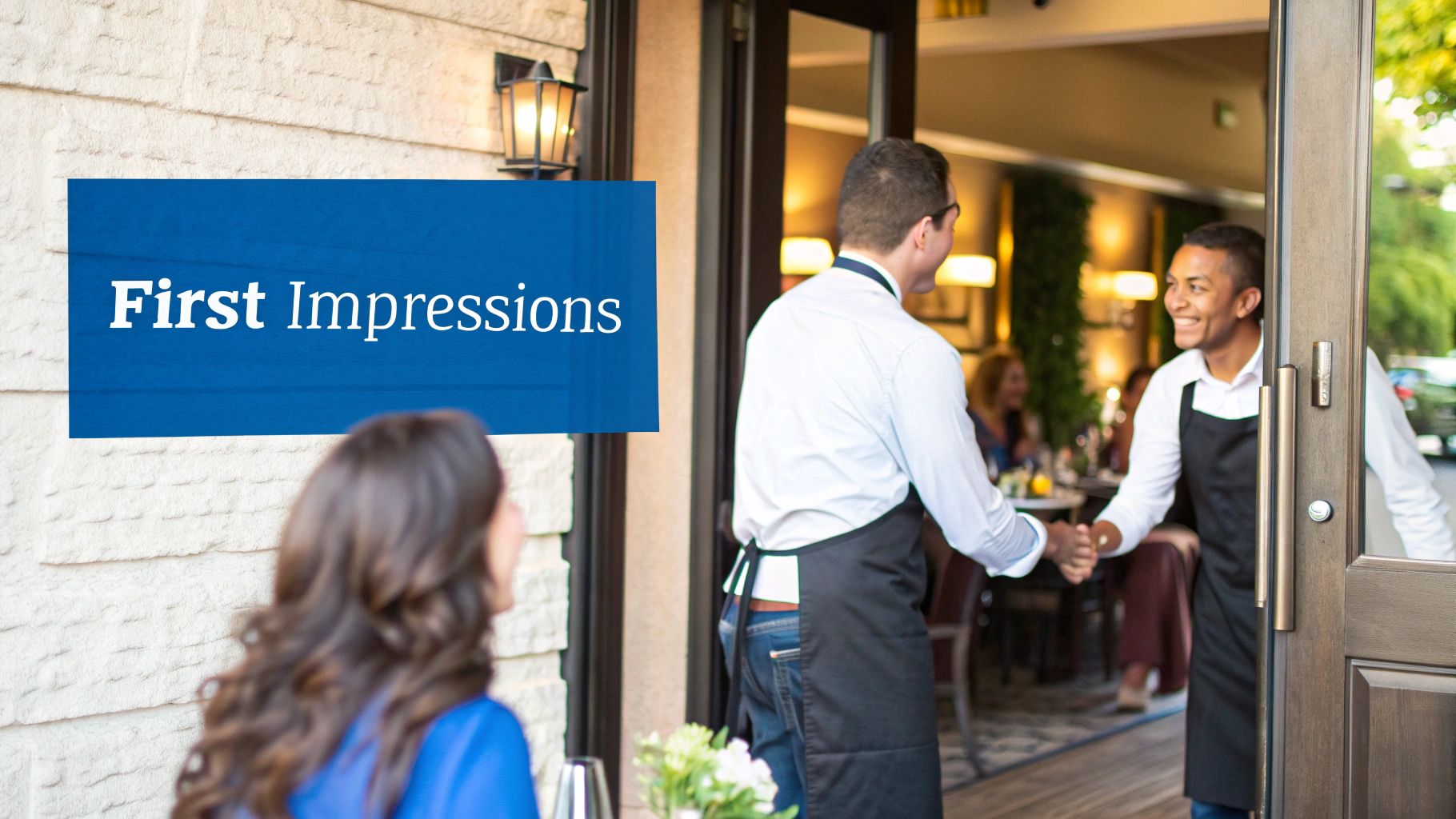
This goes way beyond one unhappy guest. Every bad interaction is a customer who won't be back, and in this industry, word travels fast—both online and off.
The Hidden Financial Drain
Bad service creates a silent, steady leak in your revenue. The link between your team's performance and your bank account is crystal clear.
One survey found that 88% of customers are less likely to return after just one bad experience. Overlooking proper training means you’re ignoring one of the most powerful levers for growth.
Think about the real costs:
- Lost Repeat Business: Unhappy diners don’t just leave; they never return.
- Negative Online Reviews: A few bad reviews can scare off hundreds of potential guests.
- Tanking Staff Morale: An untrained, anxious team leads to high turnover and endless hiring costs.
Taking Back Control of Your Reputation
Breaking this cycle means creating a clear path forward for your team. When you empower your staff with our structured plan, they transform into true ambassadors for your brand.
They stop just serving food and start creating experiences. They become your single greatest asset, capable of turning a first-time visitor into a loyal regular.
Your team's ability to handle pressure, solve problems, and create a welcoming atmosphere is the foundation of your restaurant's success. It's what separates the places that just get by from the ones that truly thrive.
This is how you build a five-star reputation. Instead of just reacting to bad reviews, you start creating the positive experiences that generate great ones, protecting both your revenue and your peace of mind.
Creating Your Restaurant's Service Playbook
Before you can coach your team, you need a game plan. A service playbook is your restaurant's promise to every guest, defining what an outstanding experience looks and feels like.
This isn't a fluffy mission statement. It's a practical, day-to-day guide that builds consistency and makes sure every interaction reflects your brand's unique personality.

Defining Your Brand's Voice
First, decide on the personality of your service. Are you a casual, family-friendly spot or a fine-dining establishment where service should be elegant and precise?
Your brand's voice shapes the language your team uses and the atmosphere you build. Getting this right ensures your service feels authentic to your restaurant's concept.
Establishing Clear Service Standards
Next, get specific with non-negotiable standards. These small details add up to create a seamless and memorable experience for your guests.
Vague instructions like "be friendly" don't work. Your playbook needs concrete, actionable steps.
Here are a few examples:
- The Greeting: Greet every guest with a genuine smile within 30 seconds of entering.
- The Check-In: Check on tables within two minutes after main courses are delivered.
- The Farewell: Give every guest a sincere "thank you" and invite them to come back.
These measurable actions empower your staff by giving them a clear definition of what success looks like on every shift.
Scripting for Success, Not Robots
Scripts get a bad rap, but they aren't about turning your staff into robots. They're about giving your team confidence for common or difficult situations.
The goal of a script isn't to force robotic recitations. It's to provide a solid foundation, so your team can handle situations with grace and add their own personality.
Your playbook should include simple scripts for key moments. This includes handling complaints, upselling specials, or managing wait times. For more ideas, see our guide on how to increase customer engagement.
Training the Core Skills of Hospitality
A service playbook is a great start, but the magic happens when your team masters the core skills of hospitality. Great service is about making genuine human connections.
This is where you go beyond taking orders and start creating experiences people remember. The goal is to give your team the tools to anticipate needs and handle any situation with grace.
Mastering Active Listening
Many people think they’re good listeners, but few truly are. Active listening is about giving your full attention to understand the real need behind a request.
Train your staff to pick up on cues. When a guest asks, "What's quick to make?" they're likely in a hurry. A well-trained server recognizes this and suggests dishes that come out of the kitchen quickly.
Empathetic Problem-Solving
Things go wrong—an order gets mixed up or a dish is delayed. How your team handles these moments is what separates a one-star review from a five-star recovery.
Instead of a defensive, "The kitchen is backed up," teach your team to lead with empathy. A simple, "I am so sorry for the delay," makes the guest feel understood. For a deeper dive, check out our guide on how to handle customer complaints.
When a guest has a problem, they aren’t just looking for a solution; they are looking for validation. A sincere apology and a quick resolution is the most powerful tool you have for building loyalty.
Role-playing these scenarios directly boosts customer satisfaction and your team's confidence.
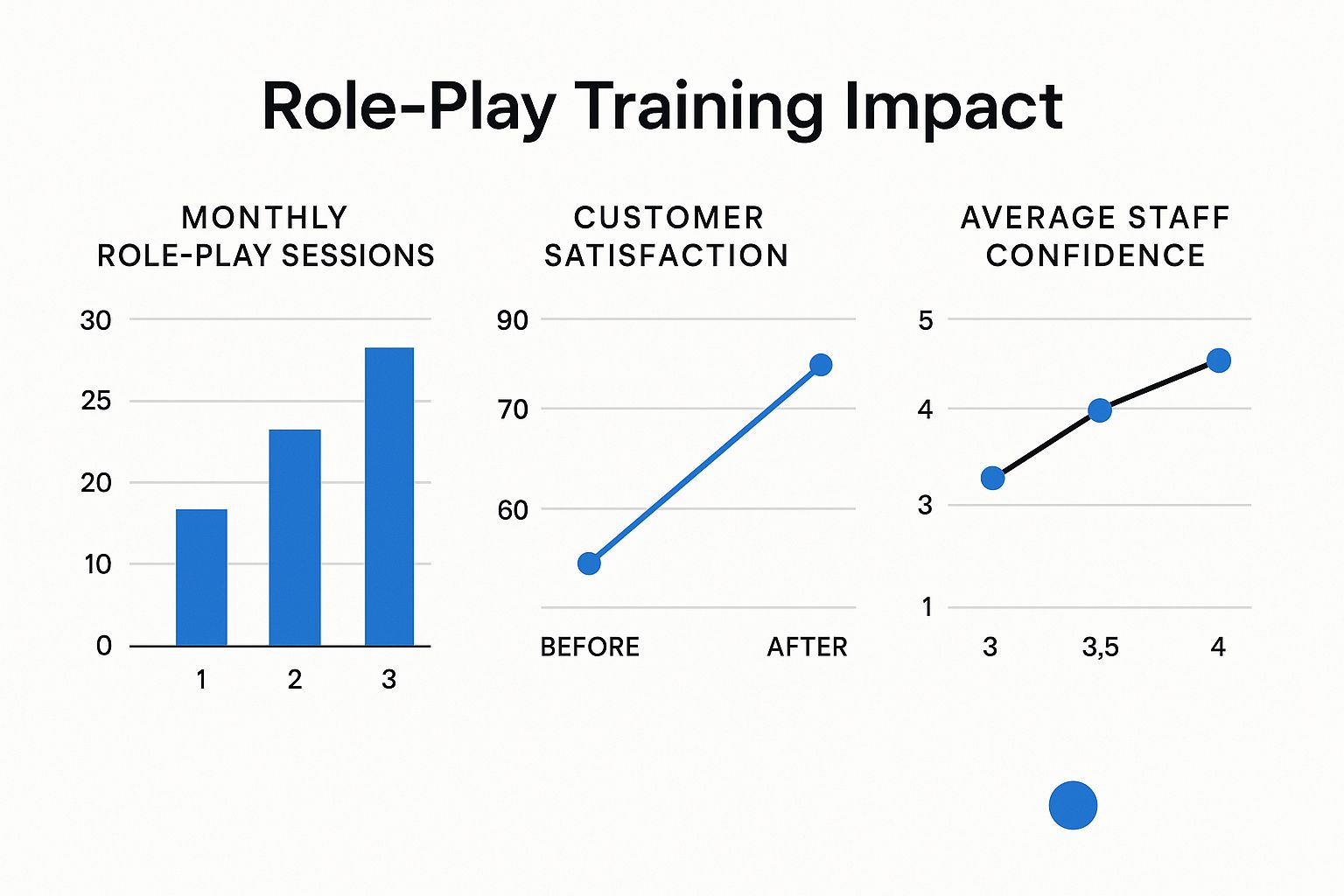
As you can see, the more you practice, the better the outcomes. It's a clear win-win for your business.
Essential Restaurant Service Training Modules
| Training Module | Key Skills Covered | Impact on Guest Experience |
|---|---|---|
| Foundational Service Steps | Greeting, seating, menu presentation, order taking, check presentation, and farewell. | Creates a consistent, smooth, and professional dining journey from start to finish. |
| Menu & Product Knowledge | Ingredient sourcing, flavor profiles, preparation methods, allergen information, and drink pairings. | Empowers staff to make confident recommendations and answer questions, enhancing guest trust. |
| Active Listening & Empathy | Reading verbal/non-verbal cues, paraphrasing to confirm understanding, showing genuine concern. | Makes guests feel heard, valued, and understood, turning a transaction into a connection. |
| Complaint Resolution & Service Recovery | The L.A.S.T. method (Listen, Apologize, Solve, Thank), de-escalation, empowerment to offer solutions. | Turns negative experiences into opportunities to build loyalty and earn positive reviews. |
| Upselling & Suggestive Selling | Recommending add-ons, specials, or premium items in a helpful, non-pushy way. | Increases check averages while also genuinely improving the guest's meal and experience. |
These modules form the backbone of a training program that builds true hospitality professionals.
The Power of Positive Body Language
Non-verbal communication often speaks louder than words. Your team's body language sets the tone for the entire experience.
Train these simple but powerful actions:
- Open Posture: Coach staff to avoid crossing their arms, which feels defensive.
- Genuine Smiles: A real smile reaches the eyes and makes guests feel instantly welcome.
- Mindful Movement: Staff should move with calm purpose, not frantic energy.
Getting your team to this level takes effort, but a structured program is critical for ensuring a high-quality experience for every guest.
Training Techniques That Actually Work
That thick training manual collecting dust isn’t helping anyone. For customer service training for restaurants to stick, it needs to be interactive and ongoing.
Your team learns best by doing, not by reading a binder. When training is engaging, it becomes a tool they're excited to use.

Bring Scenarios to Life with Role-Playing
Role-playing is one of the most powerful tools you have. It gives your team a safe space to practice high-pressure moments without a real guest's dinner on the line.
Start with classic, challenging scenarios:
- The Unhappy Diner: Practice the L.A.S.T. method: Listen, Apologize, Solve, and Thank.
- The Demanding Party: Simulate a large group with complicated orders and restrictions.
- The Upselling Opportunity: Coach how to suggest pairings in a helpful, not pushy, way.
By running through these moments, your team develops a reflex for empathy and quick problem-solving. They stop panicking and start responding with professional solutions.
Turn Reviews into Case Studies
Your online reviews are a goldmine of free training material. Turn them into real-world case studies for your pre-shift meetings.
Break down a glowing five-star review with the team. What specifically did the server do to make that guest so happy? Celebrating wins reinforces great habits.
On the flip side, dissect a negative review without pointing fingers. Brainstorm as a group how the situation could have been handled differently. This is a core part of any customer experience optimization strategy.
Make Learning a Daily Habit
A one-and-done training day is not effective. Short, consistent reinforcement during daily pre-shift huddles is the key.
Use these quick meetings to introduce a "skill of the day" or run a fast role-playing scenario. This micro-learning approach keeps service skills fresh and top-of-mind.
The Results of Five-Star Service
So, what does success actually look like? It’s not just a feeling; it’s a set of measurable results you can see in your dining room and on your balance sheet.
Imagine scrolling through reviews where guests rave about your team. Picture a dining room buzzing with repeat customers. This is the peace of mind that comes from knowing your restaurant is firing on all cylinders.
From Better Service to a Stronger Bottom Line
When you invest in customer service training for restaurants, you kick off a chain reaction that boosts your profits. It starts with your team’s confidence.
A well-trained server is a trusted guide, not a pushy salesperson. This naturally leads to bigger check averages and more generous tips.
The ROI on great service training is clear. Happy guests don't just come back; they spend more. One study found that 86% of consumers will happily pay more for a superior customer experience.
Building a Reputation That Fills Tables
Your reputation is everything, and great service is its foundation. Every positive interaction is another brick in that foundation.
This creates word-of-mouth buzz that no advertising can buy. Glowing online reviews act as powerful social proof, drawing in new customers.
This positive feedback loop builds a rock-solid local reputation. You can learn more about how reputation management drives revenue for small businesses in our guide. Ultimately, this is how you implement strategies to increase restaurant sales and achieve long-term growth.
Your Top Questions Answered
Even the best-laid plans come with questions. Let's tackle some of the most common ones I hear from restaurant owners.
How Often Should My Staff Be Training?
Fantastic service training isn't a one-time event. It needs to be an ongoing conversation woven into your restaurant's culture.
A rhythm that works wonders:
- A Deep Dive for New Hires: Onboard them fully before their first real shift.
- Quick Daily Huddles: Use 5-minute pre-shift meetings to spotlight one key skill.
- Quarterly Refreshers: Schedule focused sessions to tackle new challenges or menu updates.
If You Could Only Teach One Thing, What Would It Be?
If I had to pick just one, it would be empathetic problem-solving. Mistakes are inevitable in a busy restaurant.
How your team responds when things go wrong defines your service. Teaching your staff to listen, apologize, and provide a swift solution is your most powerful tool.
How Do I Know if the Training is Working?
You can't fix what you don't measure. Success isn't just seeing fewer complaints; it's seeing a confident team that actively boosts your bottom line.
Keep your finger on the pulse by tracking these indicators:
- The Hard Numbers: Watch trends in online review scores, staff turnover, and check averages.
- The Vibe on the Floor: Observe team morale and confidence. Pay attention to positive words in guest feedback.
Can I Do This on a Shoestring Budget?
Absolutely. World-class training doesn't have to be expensive. Some of the most impactful methods are low-cost and rely on consistency.
Use the resources you already have. Your five-star reviews are perfect examples of what to do right, and negative reviews are free case studies for role-playing.
Feeling buried under negative reviews and tired of inconsistent service? It's time to stop losing customers to the restaurant down the street. Review Overhaul gives you the expert guidance and practical tools to build a five-star reputation that drives real growth.
