
Feeling the sting of negative reviews after pouring your heart and soul into your business? It’s a common and painful frustration for small business owners. This is where customer experience optimization becomes your most powerful tool.
You're the hero of this story, and you're facing a real villain: a damaged online reputation that's costing you customers and revenue. The stakes are high. You can either continue losing ground or you can build a rock-solid reputation that fuels growth and gives you back your peace of mind.
A Simple Plan to Win Back Customers
We act as your trusted guide, providing a clear, step-by-step plan to help you overhaul your customer experience. Our straightforward process is designed to turn your loudest critics into your biggest fans.
This guide will give you a simple framework:
- Step 1: Audit Your Current Experience: We'll help you pinpoint exactly where the friction is.
- Step 2: Design a Better Journey: You'll create repeatable processes that deliver a professional, consistent experience every time.
- Step 3: Implement and Measure: The final piece is rolling out the changes and tracking how they're actually affecting your online reputation.
Success means a better reputation driving more sales and restoring your confidence. The alternative is continuing to lose customers and feeling the constant stress of a reputation you can't control.
The Modern Customer Expectation
Let's be blunt: today's customers expect a lot. By 2025, customer experience (CX) has solidified its place as a top priority for businesses, and for good reason. In the B2B world, a staggering 84% of decision-makers see improving CX as a critical goal.
It’s not just business buyers, either. A solid 55% of consumers now believe that 'nothing excuses a bad customer experience.' This is why 40% of CX leaders are planning to increase their budgets to meet these new demands.
What this means for you is simple: providing a consistently great experience is no longer a "nice-to-have." It’s a core requirement for survival.
A Path to Reputation Recovery
The journey to earning better reviews starts with a clear-eyed look at what's going wrong and tackling those issues directly. This is about being proactive, not just reactive.
Of course, a big part of this is knowing how to handle the feedback you're already getting. For specific, actionable advice on that, take a look at our guide on how to respond to negative reviews. When you take control of the conversation, you send a powerful message that you are absolutely committed to getting it right.
Uncovering the Truth in Customer Feedback
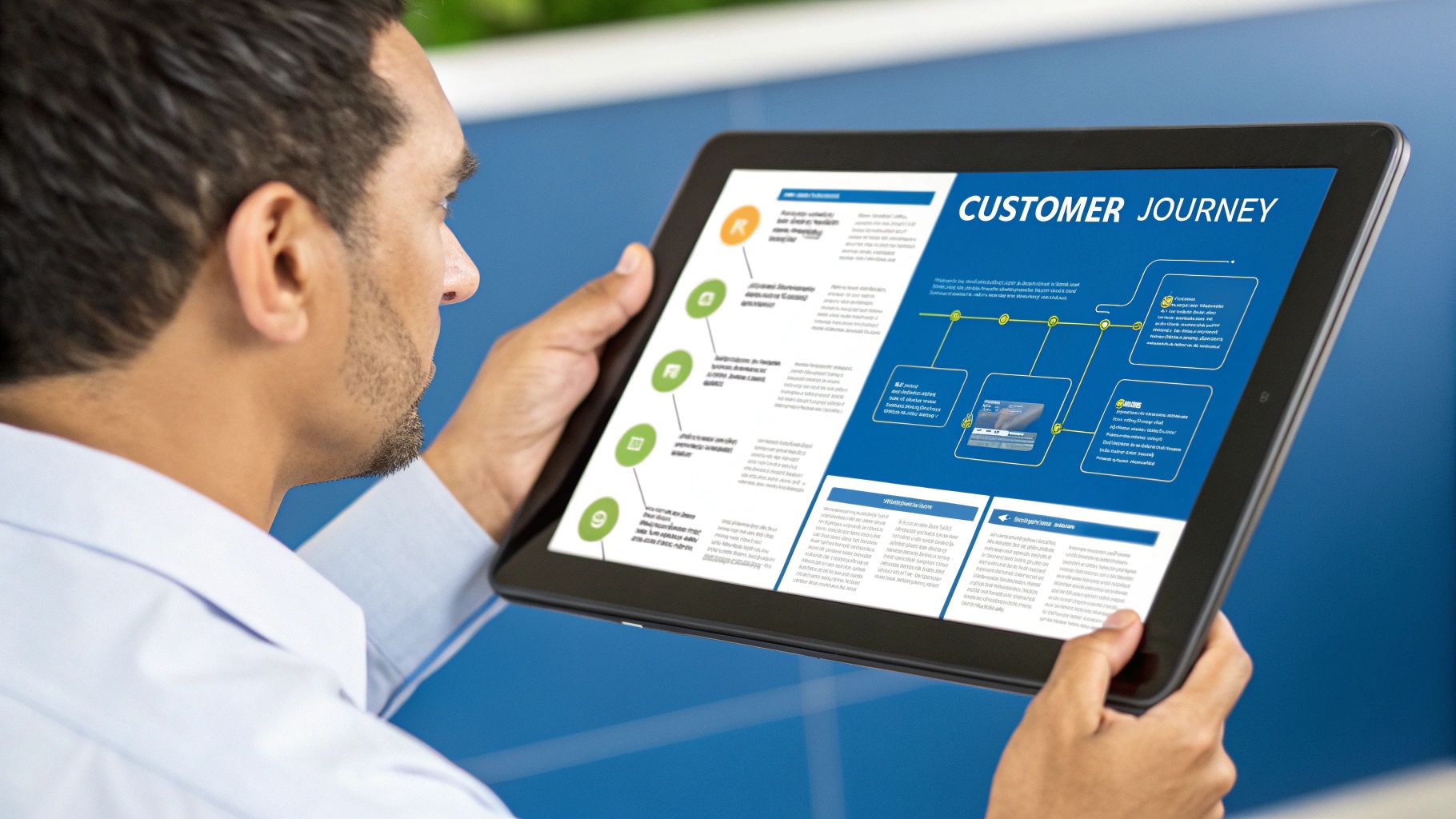
Before you can fix a problem, you have to understand it from every angle. This is especially true when it comes to customer experience optimization. It all begins with a frank, thorough audit of your current customer interactions.
For a small business owner, negative feedback often feels personal. But learning to see it as objective data is the first step toward reclaiming your reputation. This audit isn't about assigning blame; it's about finding opportunities for improvement.
Systematically Gathering Actionable Data
Your customers are constantly telling you what they think, but their opinions are scattered all over the place. A proper audit means actively seeking out and organizing these fragments of information into a single, coherent story.
Start by creating one central place for all feedback.
- Online Review Platforms: Go through your reviews on Google, Yelp, and Facebook. You're looking for recurring themes, not just one-off complaints.
- Social Media Mentions: Keep a close eye on comments, direct messages, and tags across all your social channels.
- Direct Communication: Dig into your customer service emails, contact form submissions, and even notes from phone calls.
The goal is to turn raw, emotional feedback into structured, actionable data. It’s one thing to know a customer was unhappy; it’s another to know that 15% of your negative reviews mentioned late arrivals.
Identifying Patterns and Root Causes
Once you’ve gathered all your data, the real work begins. A single bad review is just an anecdote, but a dozen reviews pointing out the same issue signal a systemic problem.
Let’s say you run a local restaurant and notice a trend in complaints about long wait times. This could point to a staffing shortage, a bottleneck in your kitchen's workflow, or a flaw in your reservation system. By identifying the pattern, you can investigate the root cause.
The most crucial step in optimizing the customer experience is listening to what is not being said directly. A complaint about price might actually be a complaint about perceived value.
This analytical approach lets you prioritize the fixes that will actually make a difference. For a deeper look at this process, our guide on harnessing customer feedback for business growth offers more strategies.
From Insights to a Strategic Plan
A successful audit doesn't end with a list of problems. It ends with a clear, prioritized action plan. Each issue you've identified should be documented with a potential solution and a metric you can use to measure success.
The real power of this audit is that it gives you hard evidence of what needs to change. For some practical guidance on making your data collection more efficient, you can learn how to get customer feedback without wasting your time.
Designing a Customer Journey That Builds Trust
Once you've dug into your customer feedback, you have a clear picture of what’s broken. Now comes the rewarding part: architecting the solution. Exceptional customer experience optimization is about methodically designing a customer journey that builds trust at every single touchpoint.
A well-designed journey creates consistency and professionalism, which are the absolute cornerstones of trust. For a small business owner, this means creating simple, repeatable processes that your team can execute flawlessly every time.
Mapping the Ideal Customer Path
The first thing to do is map out the ideal customer journey, touchpoint by touchpoint. Think of it as creating a blueprint for excellence.
This map should cover every stage of the customer lifecycle:
- Initial Contact: How do people find you? What's their very first impression?
- Quoting and Scheduling: Is your process clear and transparent?
- Service Delivery: What actually happens during the service?
- Billing and Payment: Are your invoices easy to understand?
- Post-Service Follow-Up: How do you ask for feedback and request a review?
By defining the ideal interaction at each of these stages, you create a powerful standard of service. A roofing contractor could transform their business simply by providing every client with detailed before-and-after photos.

The image above really drives home how crucial personalization is. Customizing the experience for each user isn't just a nice-to-have feature; it's a core strategy for building trust.
Key Touchpoints for Customer Experience Optimization
| Customer Journey Stage | Common Pain Point | Actionable Optimization Step |
|---|---|---|
| Awareness & Initial Contact | Confusing website, slow response to inquiries. | Simplify your website navigation. Implement an automated email response acknowledging receipt of a contact form submission. |
| Quoting & Scheduling | Vague quotes, difficulty booking appointments. | Use templated, itemized quotes for transparency. Offer an online scheduling tool for convenience. |
| Service Delivery | Poor communication on-site, unexpected delays. | Train technicians to provide a brief arrival and departure summary. Set up automated SMS updates for delays. |
| Billing & Payment | Surprise charges, limited payment options. | Review invoices to ensure all charges are clearly explained. Offer online payment portals and mobile payment options. |
| Post-Service & Follow-Up | No follow-up, difficult to leave feedback. | Send a simple post-service email with a direct link to leave a review. Follow up with a personal call a week later. |
By systematically addressing these pain points, you're not just fixing problems—you're actively building a reputation for reliability and customer care.
Creating Your Operational Playbook
With your journey map complete, it’s time to build the tools and processes that bring it to life. This "operational playbook" is your secret weapon for ensuring every team member delivers the same high-quality experience.
This could involve creating standardized templates for common communications, like appointment reminders or follow-up emails. To truly master this, a deep understanding of Customer Journey Optimization is essential.
A customer journey map is more than a flowchart; it is a declaration of your commitment to the customer. It says, "We have thought about your experience, and we are dedicated to making it exceptional."
The market for tools that support this is exploding for a reason. 84% of customers say they're more likely to stick with a company that personalizes their experience. By creating your own playbook, you’re tapping directly into this powerful trend.
Training Your Team for Excellence
A brilliant plan is worthless without the people to execute it. Your team needs to understand not just what to do, but why they’re doing it.
Regularly review the customer journey map with your staff. Use real-world examples from your feedback audit to show the impact of both positive and negative interactions. For more ideas on polishing your company's image, there are many proven strategies to improve customer experience.
Implementing and Measuring Your New CX Strategy
Having a solid plan on paper is a great first step, but the real work starts when you put it into motion. A brilliant customer experience optimization strategy is only as good as its execution and the results it delivers.
Rolling out new procedures can feel like a massive undertaking, but it doesn't have to be. The whole process hinges on clear communication and giving your team the tools and training they need to shine.
From Plan to Action
The secret to a smooth rollout is a phased, deliberate approach. Trying to change everything at once is a recipe for chaos. Instead, focus on implementing one or two high-impact improvements at a time.
Let's say your audit revealed that inconsistent appointment reminders were a major frustration for clients. Start there. Once that's running smoothly and you're seeing fewer no-shows, you can tackle the next priority.
This incremental method is powerful. It builds momentum and confidence, proving the value of your efforts.
Defining Your Key Metrics
So, how do you know if any of this is actually working? You have to measure it. It’s about tracking a few simple, powerful metrics that directly reflect what your customers think.
Pick a handful of key performance indicators (KPIs) to watch like a hawk. These numbers are your compass.
- Average Google Rating: This is your most public-facing grade. A steady climb is undeniable proof your improvements are working.
- Positive-to-Negative Feedback Ratio: When this scale tips heavily toward the positive, you know you've found a winning formula.
- Customer Retention Rate: Measuring repeat business is one of the truest tests of customer loyalty.
By focusing on these straightforward metrics, you create a direct line of sight between a better customer experience and a healthier bottom line.
Creating Your CX Scorecard
To make tracking your progress even simpler, I highly recommend creating a "CX Scorecard." This can be a basic spreadsheet you update every month. It gives you a quick, visual snapshot of your performance.
Your scorecard should list your chosen KPIs, your starting point (a baseline), and the goal you're aiming for.
| Metric | Baseline (Start Date) | Current Status | Goal |
|---|---|---|---|
| Average Google Rating | 3.8 Stars | 4.2 Stars | 4.5 Stars |
| Customer Retention Rate | 65% | 72% | 80% |
| Review Response Time | 48 Hours | 12 Hours | < 24 Hours |
A CX Scorecard transforms abstract goals into concrete numbers. It’s the proof that your commitment to customer experience is not just talk—it's driving real, tangible improvements.
This cycle of implementation and measurement is how you prove your hard work is paying off. To make sure your measurement tactics fit into a larger plan, take a look at our guide on online reputation management best practices.
Turning Negative Reviews into Marketing Assets

This is what success looks like. Imagine a steady stream of 5-star reviews popping up online, each one a testament to the hard work your team puts in every day. Picture a surge in referral business because your customers can't stop raving about their experience.
For a small business owner, this journey isn't just about damage control. It's about engineering an operation that generates positive sentiment by design. The result? A renewed sense of pride in your company's reputation and the peace of mind that comes with it.
A Case Study in Transformation
Let's look at a local HVAC company owner stuck with a low 3.4-star Google rating. He was frustrated. He knew his team did quality work, but they were constantly getting hit with complaints about poor communication and messy job sites.
He decided to take action, following a simple plan:
- He audited everything. He read every review and saw two recurring themes: a lack of updates on arrival times and crews leaving debris behind.
- He designed a new process. He set up an automated texting system for arrival notifications and created a mandatory "post-job cleanup checklist."
- He trained his team. He explained why these changes were critical for the business's survival and their own job security.
Within six months, his Google rating climbed to 4.6 stars. New positive reviews specifically mentioned the great communication and how clean his technicians were. This authentic social proof became his most powerful marketing tool, leading to a 20% increase in new customer inquiries.
The Clear Choice for Your Business
This story perfectly illustrates the power of a strategic approach to customer experience. You can continue struggling with the anxiety of a damaged reputation, or you can embrace a future defined by customer loyalty, growth, and pride.
The stakes are high. Sticking with the status quo means accepting a constant battle that eats away at your energy and revenue. Understanding the importance of review management services is a crucial part of this shift.
"Your most unhappy customers are your greatest source of learning." This timeless advice is the core of effective customer experience optimization. Each negative review is a roadmap pointing to your next opportunity for improvement.
When you're ready to stop reacting and start proactively building, the next step is a simple conversation. The plan is straightforward, and this guide is here to help you navigate it.
Answering Your Top CX Questions
Diving into a full-scale customer experience overhaul can feel like a huge undertaking. It's completely normal to have questions about where to start, what it will cost, and when you'll actually see a return.
Let's cut through the noise and get you some straight, practical answers.
Where Do I Even Begin with Improving Customer Experience?
The absolute first thing you must do is listen with intention. Before you tweak a single script, you have to get a crystal-clear picture of what your customers are actually experiencing right now.
You're not looking for who to blame; you're looking for patterns. One customer complaining is an anecdote; five is a flashing red light.
- Round up all your feedback. Pull everything together—Google Business Profile reviews, social media DMs, and emails.
- Find the common threads. What themes keep popping up?
- Zero in on the biggest pain point. Identify the one or two issues that cause the most friction and appear most often.
Starting with a deep dive into your existing feedback ensures your first moves are the right ones. It stops you from wasting time and money.
How Can a Small Business Afford This?
Many owners think improving the customer experience requires a hefty budget. The truth is, the most powerful changes you can make are often low-cost or even free. Your biggest investment will be your time and commitment.
An amazing customer experience is built on solid, reliable processes, not on flashy, expensive tech.
Your real competitive advantage isn't a massive ad spend. It's the ability to deliver a consistently personal and professional experience that the bigger companies can't match.
Here are a few budget-friendly ideas you can implement right away:
- Create simple communication templates. Draft professional, standardized emails for confirmations, reminders, and follow-ups.
- Invest time in team training. Use your team meetings to walk through recent customer feedback and role-play tough conversations.
- Document your core processes. A simple checklist for pre-job prep or post-job cleanup ensures every customer gets the same high-quality service.
These foundational steps cost next to nothing but pay huge dividends in customer loyalty and glowing reviews.
How Long Until I See a Real Difference?
While you might see some quick wins, building a standout reputation is a long game. It's a marathon, not a sprint. The big results—a jump in your star rating or more word-of-mouth referrals—take time to build.
A reputation isn't damaged in a day, and it can't be rebuilt overnight.
You can realistically expect to see a clear, positive trend within three to six months of consistent effort. Sporadic efforts will only ever produce sporadic results. By tracking your metrics, you can see the small victories add up, keeping you motivated for the long haul.
Are you ready to stop reacting to bad reviews and start building a reputation that drives growth? At Review Overhaul, we provide a clear, proven plan to help you transform your customer experience. Schedule your free consultation today and take the first step toward a brighter future for your business.
