
That sinking feeling in your stomach when an unfair review pops up on Glassdoor? You’ve worked tirelessly to build a positive culture, only to see one skewed comment threaten it all. For a business owner like you, this isn't just frustrating—it's a direct hit to your ability to attract top talent.
This bad review is now the first thing incredible candidates see. It’s costing you applicants, driving up hiring costs, and even making your current team second-guess the culture they helped build. You feel powerless, watching someone else's narrative damage the company you built.
You Are Not Powerless. We Can Fix This.
At Review Overhaul, we've guided countless business owners through this exact situation. You are the hero of this story, and we are the expert guide with a simple plan to help you reclaim your company's reputation. We give you the tools and strategy to either remove the damaging review or bury it with positive feedback.
Imagine your Glassdoor profile accurately reflecting your great workplace. Top candidates are excited to apply, your hiring costs drop, and your team's morale is stronger than ever. This isn't just about removing one review; it's about building a resilient brand that attracts the right people and gives you peace of mind.
"Review Overhaul helped us navigate a really difficult review situation. Their process was clear, effective, and gave us back control over our online reputation." – Satisfied Client
Instead of letting that one review continue to cost you customers and talent, take the first step towards a solution. Our 3-step plan is designed to restore your reputation and protect your business's future.
Don't let a disgruntled ex-employee define your company. Schedule your free reputation audit today and let's build a reputation that drives growth.
The True Cost of a Bad Reputation
The stakes are much higher than just a bruised ego. A negative employer brand has real, measurable consequences for your business's growth.
- Losing Top Candidates: Let's be real, top talent does their homework. Nearly 50% of candidates dig into Glassdoor reviews before they even think about talking to a recruiter. A few bad reviews can gut your talent pipeline overnight.
- Increased Hiring Costs: When your reputation is on the rocks, you have to spend more time and money just to get qualified people in the door. It drives up recruitment costs across the board.
- Damaged Team Morale: Your current team sees these reviews, too. Letting unfair negativity fester online can erode the trust and culture you’ve worked so hard to create.
Think of this guide as your playbook for taking back the narrative. We've been in the trenches with countless business owners dealing with this exact headache. You're the one who built this company, and we're here to give you the clear, straightforward steps to protect it.
Tackling this is a crucial piece of a bigger puzzle, which you can dive into with our complete guide to online reputation management. For now, let's get this specific problem sorted.
Your 3-Step Plan to Reclaim Your Reputation
Before you can solve the problem, you have to play by Glassdoor's rules. You can't remove a review just because it’s negative. The only way forward is to prove that the review violates Glassdoor’s Community Guidelines.
Our simple 3-step plan will guide you through the process, from identifying violations to building a stronger reputation for the future.
Step 1: Identify The Violation
Your job isn't to argue about the reviewer's opinion; it's to build a factual case based on Glassdoor's own policies. Emotional appeals won’t get you anywhere. The moderators need you to point to the exact rule that was broken.
Here are the most common violations that give you a legitimate reason to flag a review for removal.
Valid Reasons for Removing a Glassdoor Review
| Violation Type | What It Means & Real-World Example |
|---|---|
| Identifies Individuals | Reviews can't name employees who aren't public-facing leaders (like C-suite execs). Example: "My manager, Jane Doe in accounting, was impossible to work with." This is a clear violation. |
| Threats or Harassment | Any content with threats, hate speech, or targeted harassment is strictly forbidden. Example: "Someone should go down there and show them what happens…" Glassdoor takes this very seriously. |
| Confidential Information | Leaking private company data like trade secrets, client names, or internal financials is a major breach. Example: "We lost the Acme Corp account because our software is so buggy." |
| False Information | The review must contain a demonstrably false statement presented as fact. This is tough to prove, but possible. Example: "The company laid off 50% of its staff last month," when you have records showing no layoffs occurred. |
| One-Word or Gibberish | A review that just says "Terrible" or is a jumble of random letters doesn't meet the "share advice" guideline. It adds no value and can be flagged. |
Your argument must be grounded in these specific, black-and-white violations. No gray areas.
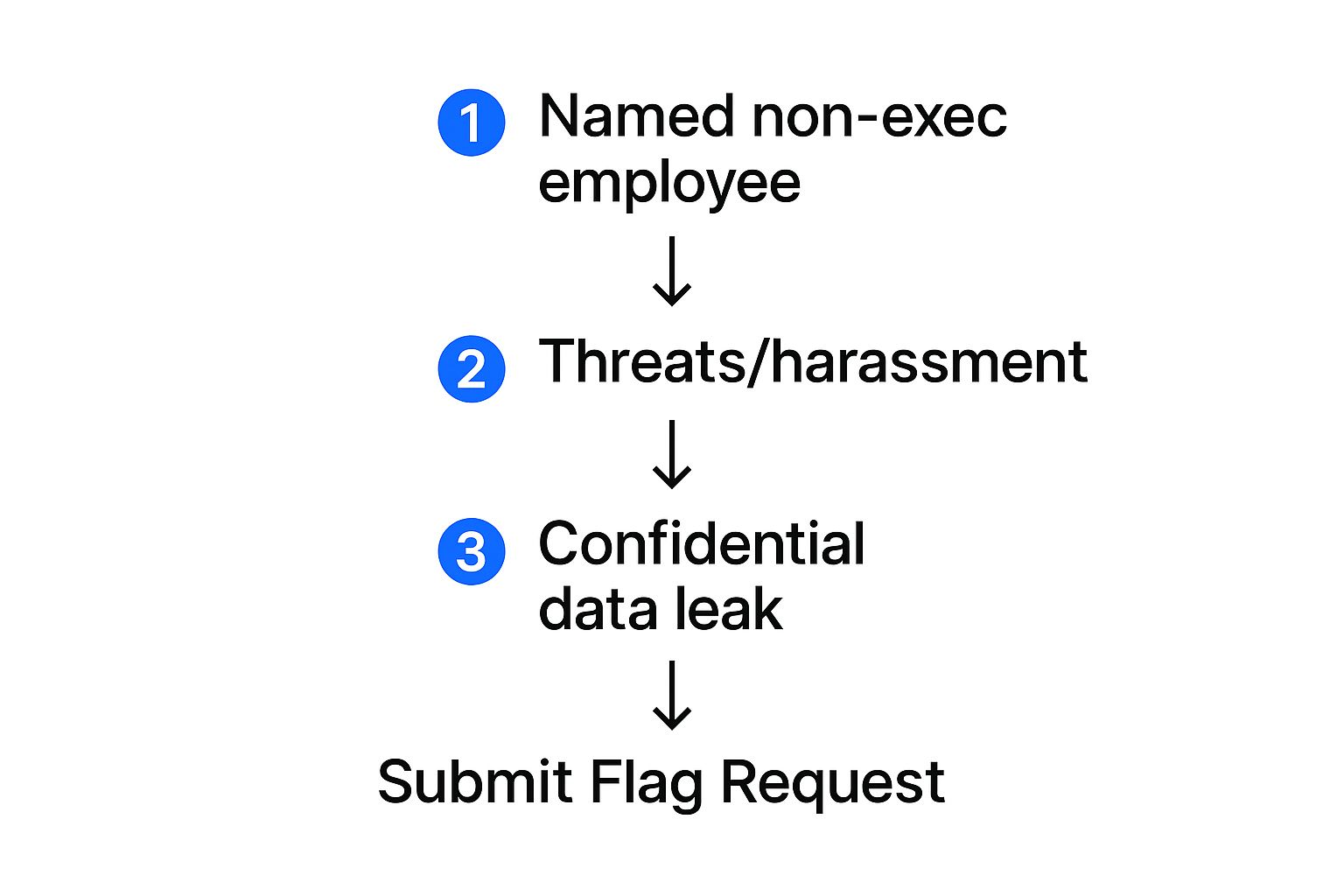
While these rules are specific to Glassdoor, the core strategy of using a platform's own guidelines against a bad review is universal. In fact, we use a similar approach in our guide on how to remove a review from Google Business.
Step 2: Flag The Review Correctly

Now that you know the rules, it's time to act. The first step to delete a review on Glassdoor is always the flagging tool. Find the review, click the flag icon, and prepare to make your case.
This is the most critical part. Your submission is not the place to vent. Your one and only job is to present a factual, objective case that proves a clear violation of Glassdoor's own rules.
Here’s how to do it effectively:
- Get Specific: Don't just claim the review is "false." Instead, say something like, "This review violates the 'False Information' policy. The reviewer claims we had layoffs in Q2, but our HR records confirm no layoffs occurred."
- Quote the Violation: If you can, pull the exact phrase from the review that breaks the rule. For example: "The review names a non-executive employee, Jane Doe, which is a direct violation of the privacy guidelines."
- Stay Professional: A calm, professional tone goes a long way. It shows you're taking the process seriously and adds weight to your claim.
The most effective flagging explanations are short, factual, and directly linked to a specific Community Guideline. Anything else is just noise.
Once you hit submit, the review officially enters Glassdoor's moderation pipeline. Be patient; this can take several business days. While you wait, a well-crafted public reply is often the best next step. We dive deep into this in our guide on how to respond to reviews.
Step 3: Fortify Your Reputation For The Future
It's easy to fixate on one negative post, but it's more productive to look at the bigger picture. When a review isn't coming down, it’s time to pivot. A rejected flag request isn't a dead end; it’s a sign to change your game plan.
Stop focusing on removal and start focusing on actively managing your reputation. Your energy is better spent on building a resilient brand presence. This is where a solid strategy for online reputation repair comes into play. Drowning out the negative with authentic, positive employee voices is a much more powerful and sustainable approach.
A Reputation That Resists Negative Reviews

As a business owner, your real power is in playing the long game. The goal is to build a reputation so strong that one negative comment is just a blip on the radar, not a five-alarm fire. This proactive approach shifts your focus from putting out fires to building a brand that naturally attracts positive feedback.
Encourage Authentic Employee Feedback
Your best defense against a bad review is a steady stream of authentic, positive ones from your current team. Happy employees are your biggest advocates, but they often need a gentle nudge. Make asking for honest feedback a natural part of your company culture.
When your current team is actively sharing their positive experiences, it naturally pushes older, negative comments down the page, reducing their visibility and impact.
Master the Art of the Positive Offboarding
How an employee leaves can be just as important as their time working with you. A staggering 34% of Glassdoor reviews come from former employees, who often leave less-than-favorable ratings. A positive offboarding experience can be your secret weapon here.
Companies that invest in positive alumni relations see former employee ratings that are nearly identical to those from current staff, as shown in this research on the impact of former employees.
A few simple steps can make all the difference:
- Conduct thoughtful exit interviews and actively listen.
- Keep the door open and wish them well.
- Maintain an alumni network to foster goodwill.
This strategy transforms a potentially negative moment into a lasting positive impression. Building this kind of resilient reputation is a core part of our complete guide to review management, where we dive deeper into these long-term strategies.
Frequently Asked Questions
Here are some of the common questions business owners like you ask when trying to get a handle on their Glassdoor profile.
Can I Just Pay to Get a Bad Review Taken Down?
Absolutely not. You cannot pay Glassdoor to delete a review, period. If a third-party service promises they can scrub a review for a fee, it's a scam. The only legitimate way a review comes down is if it violates Glassdoor's Community Guidelines.
Should I Reply to the Review in Public?
It depends. If the review clearly breaks the rules, your first move should always be to flag it. Don't engage. But if it's just someone's honest (and negative) opinion, posting a calm, professional response is one of the best things you can do.
A thoughtful reply shows you're listening. That kind of engagement can leave a better impression on potential hires than the original negative review ever could.
How Long Does It Take for Glassdoor to Review a Flag?
It varies, but you can generally expect a decision within a few business days. Glassdoor will send an email letting you know whether they decided to remove the content or keep it up.
What Happens if They Deny My Request to Remove It?
If Glassdoor decides the review doesn't violate their policies, it's time to change your strategy. Your next step is to post that professional public response. After that, shift your energy toward encouraging your current, happy employees to leave their own feedback.
Keeping up with your online reputation can feel like a constant battle. At Review Overhaul, we offer the expertise and strategy to take that weight off your shoulders and build a stronger brand. Schedule your free reputation audit today and let us show you how to turn your reviews into a major asset.
