
As a small business owner, you pour everything into your work, but a single negative review feels like a personal attack, threatening to undo all your effort. You know what people say online directly impacts your bottom line, and the fear of losing customers to unfair comments is a constant stress. It feels like navigating a minefield, where one misstep could shatter the trust you've fought so hard to build.
You're not just losing potential sales; you're losing peace of mind. It’s overwhelming to wonder what new negative comment might pop up next and how to even begin to fix it. But what if there was a clear path to not only defend your reputation but actively build it into your most powerful asset?
Review Overhaul is the guide you need. We provide a simple 3-step plan to help you take back control of your online narrative.
Imagine transforming that anxiety into a confident strategy that attracts new customers and builds unshakable loyalty. You can move from a place of reaction and fear to one of proactive growth, knowing your online presence reflects the true quality of your business. This is how you achieve a better reputation that drives more sales and gives you peace of mind.
"Working with Review Overhaul was a game-changer. Our online rating went from 3.2 to 4.8 in just a few months, and our bookings have increased by 30%." – Local Restaurant Owner
The stakes are clear: continue letting bad reviews drain your revenue, or partner with a guide who can help you achieve sustainable growth. The choice is yours.
1. Proactive Social Media Monitoring and Listening
Effective online reputation management is not a passive activity; it requires a commitment to active engagement. The first and most fundamental practice is proactive social media monitoring and listening. This involves continuously tracking mentions of your brand across digital platforms to understand and shape public perception in real-time.

This practice moves beyond simply waiting for reviews on Google or Yelp. It is about actively seeking out conversations on platforms like Facebook, Instagram, and X (formerly Twitter). By "listening," you not only catch direct @mentions but also uncover broader conversations about your industry, allowing you to stay ahead of potential crises.
Why Monitoring Is a Cornerstone Practice
For a local business, a single negative comment can go viral within a community and significantly impact foot traffic. Proactive monitoring transforms your approach from reactive damage control to proactive brand stewardship. This is a core component of any robust strategy for online reputation management best practices.
Key Insight: Social listening is the difference between hearing a customer complaint whispered in a crowded room versus having it shouted through a megaphone. Catching it early allows for a private, direct resolution.
Actionable Implementation Steps
To effectively implement social media monitoring, your business can follow a structured plan:
- Establish a Monitoring Framework: Use free tools like Google Alerts for your business name, common misspellings, and the names of key staff.
- Leverage Specialized Tools: Invest in platforms like Hootsuite, Mention, or Brandwatch for more comprehensive coverage and sentiment analysis.
- Develop a Response Protocol: Create a clear guide for your team on how to respond, defining response time, tone, and escalation processes.
- Analyze Competitor Mentions: Monitor what customers are saying about your local competitors to reveal service gaps you can fill.
2. Strategic Content Creation and SEO Optimization
Beyond reacting to existing mentions, a powerful online reputation management strategy involves proactively shaping the conversation. This is achieved through strategic content creation and search engine optimization (SEO). By developing and publishing high-quality, valuable content, your business can control the narrative and establish authority.
This practice is about creating assets that your business owns, such as blog posts, case studies, and videos. When optimized correctly, this content ranks highly in search results, effectively pushing down any less desirable or negative results. It’s a long-term investment in building a digital fortress of positive information around your brand.
Why Content Is a Cornerstone Practice
For local service businesses, your expertise is your greatest asset. Strategic content creation allows you to showcase that expertise, building trust and credibility long before a customer ever contacts you. This is a foundational pillar of online reputation management best practices because it directly populates search results with positive, brand-controlled information.
Key Insight: You can't always remove negative content, but you can bury it. Publishing authoritative, SEO-optimized content is like adding layers of fresh, positive soil on top of a weed, eventually starving it of sunlight.
Actionable Implementation Steps
To effectively implement strategic content creation, your business can adopt a systematic approach:
- Embrace the "They Ask, You Answer" Philosophy: Identify the most common questions your customers have and create detailed content that answers them transparently.
- Focus on E-A-T Principles: Google rewards content demonstrating Expertise, Authoritativeness, and Trustworthiness (E-A-T).
- Develop a Content Calendar: Plan your content in advance to ensure a consistent output of valuable material that keeps your brand visible.
- Optimize for Local and Voice Search: Ensure your content is optimized with local keywords (e.g., "best dentist in Brooklyn") and structured for modern search methods.
3. Review Management and Customer Feedback Systems
While social listening casts a wide net, review management focuses on the critical platforms where customers formally share their experiences. This practice involves systematically monitoring, responding to, and learning from reviews on sites like Google and Yelp. For a local healthcare practice or law firm, managing these platforms is a direct reflection of their professional standards.

This system goes beyond just reacting to feedback. It is about creating a proactive loop where you encourage satisfied customers to share their positive experiences while using criticism to fuel operational improvements.
Why Review Management Is a Cornerstone Practice
For local businesses, reviews are the new word-of-mouth, directly influencing purchasing decisions and search engine rankings. A well-managed review profile signals trustworthiness and quality, turning a potential customer into a booked appointment or a sale. Implementing a robust strategy for online reputation management best practices centered on feedback is essential for growth.
Key Insight: Responding to a negative review isn't just for the unhappy customer; it's a public demonstration to all future prospects that you take accountability and are committed to quality service.
Actionable Implementation Steps
To build an effective review management system, your business should establish a clear and consistent process:
- Establish a Response Protocol: Commit to responding to all reviews, both positive and negative, within a 24-48 hour window.
- Encourage Authentic Reviews: After a successful service, send a follow-up email or text with a simple, direct link for the customer to leave a review.
- Use Feedback to Drive Improvement: Regularly analyze your reviews to spot recurring themes and make tangible business improvements.
- Avoid Review Manipulation: Never offer incentives for reviews, buy fake reviews, or pressure customers to remove negative feedback.
4. Crisis Communication and Response Planning
While proactive monitoring is defensive, a crisis communication plan is your offensive strategy for when a reputation threat becomes a reality. This practice involves developing comprehensive protocols for managing negative publicity, from a severe service failure to a viral customer complaint. It moves beyond simple review responses to a structured, pre-planned approach.
This process involves preparing for various scenarios with pre-written templates and defining clear escalation procedures. A well-rehearsed plan ensures your response is swift, consistent, and professional, minimizing damage and demonstrating accountability.
Why a Response Plan Is a Cornerstone Practice
In a digital age where news travels instantly, a delayed or disjointed response can be more damaging than the initial incident. A formal plan removes panic and guesswork, allowing your team to act decisively. This is a critical component of any effective strategy for online reputation management best practices. For businesses in high-stakes industries, having a roadmap is non-negotiable. For a detailed roadmap, consult a complete guide to hotel crisis management.
Key Insight: A crisis doesn't become a disaster because of the initial event; it becomes a disaster because of a poor response. A plan is your insurance policy against a mishandled reaction.
The following infographic illustrates the fundamental process flow that should be at the core of any crisis response.
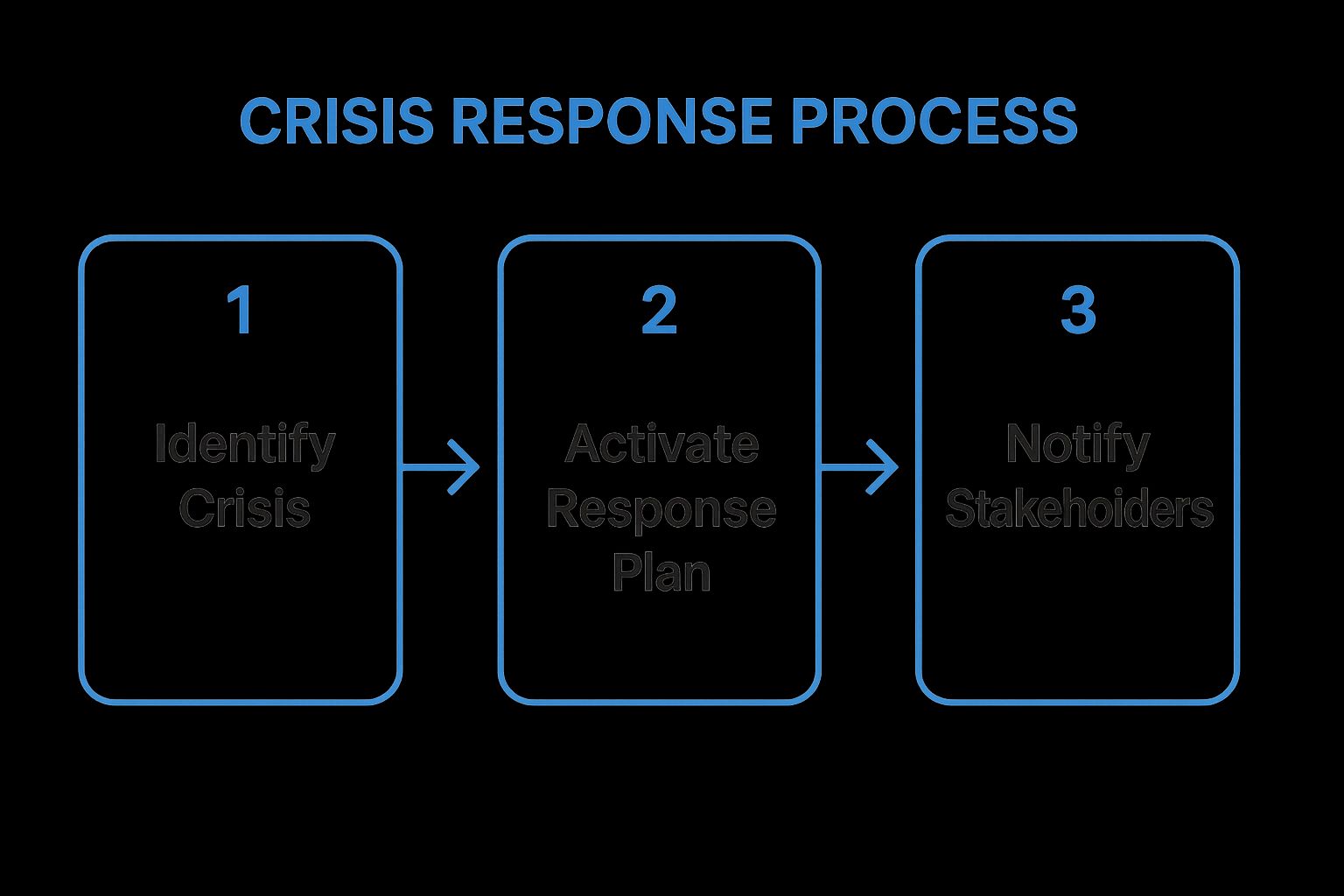
This simple, three-step sequence forms the backbone of an effective and timely crisis management effort.
Actionable Implementation Steps
To build a resilient crisis communication plan, your business should take the following structured steps:
- Identify Potential Scenarios: Brainstorm a list of potential crises relevant to your business, such as data breaches or employee misconduct.
- Assemble a Crisis Team: Designate a core team with clearly defined roles: a spokesperson, a social media monitor, and a decision-maker.
- Develop Response Templates: Draft pre-approved messaging for various scenarios, including initial holding statements and social media posts.
- Establish a Clear Protocol: Document the step-by-step procedure for when a crisis is identified, including who to notify and when to activate the plan. Training your team on how to respond to negative reviews is an excellent starting point.
5. Influencer and Stakeholder Relationship Management
Your online reputation is not built in a vacuum; it is shaped by the voices and networks surrounding your brand. A sophisticated approach involves actively building relationships with key influencers, industry experts, loyal customers, and even your own employees. These stakeholders can become powerful advocates who amplify your positive narratives.
This practice extends beyond transactional influencer marketing. It is about fostering genuine, long-term partnerships with individuals whose values align with your own. By engaging with these key figures authentically, you build a network of trust that can validate your expertise and reinforce your brand values.
Why Relationship Building Is a Cornerstone Practice
For a local service business, a strong network of advocates provides a powerful reputational shield. This strategic cultivation of relationships is one of the most effective online reputation management best practices because it decentralizes your brand's defense. It transforms your reputation from something you alone must protect into a shared asset upheld by a community.
Key Insight: A transactional influencer post is a temporary billboard. A genuine stakeholder relationship is a permanent ambassador who champions your brand from a place of authentic belief.
Actionable Implementation Steps
To effectively implement influencer and stakeholder relationship management, your business can adopt a structured approach:
- Identify Aligned Voices: Look for local bloggers, community leaders, or industry professionals whose audience and values match your brand.
- Engage Authentically and Add Value: Interact with their content, share their work, and offer your expertise without an immediate ask.
- Develop an Employee Advocacy Program: Your employees are your most credible advocates. Empower them to share positive company news on their personal social networks.
- Participate in Community and Industry Events: Position your key personnel as thought leaders by speaking at local business events or participating in industry panels.
6. Transparency and Authentic Communication
In today's market, customers crave authenticity more than perfection. Embracing transparency means adopting open, honest communication practices that build deep-seated trust. This involves sharing not only your successes but also your challenges and admitting mistakes openly.

This practice requires moving beyond curated corporate messaging and embracing a genuine, relatable voice. When a customer feels they know and trust the values of the business, they are more likely to become loyal advocates, even when minor issues arise.
Why Transparency Is a Cornerstone Practice
For a service-based business, trust is the ultimate currency. Transparency is a powerful tool in your online reputation management best practices toolkit because it preemptively builds a foundation of goodwill. When you are open about your processes and values, customers are more forgiving of errors.
Key Insight: Authenticity is not about being flawless; it is about being real. Customers will connect with your humanity far more than they will connect with an image of corporate perfection.
Actionable Implementation Steps
To integrate transparency into your reputation strategy, you can implement the following structured actions:
- Develop a Consistent Brand Voice: Define a communication style that genuinely reflects your core values and use it across all platforms.
- Share Behind-the-Scenes Content: Humanize your business by showing the real people and processes that make it run.
- Admit Mistakes Quickly and Publicly: When an error occurs, address it head-on, apologize sincerely, and explain the steps you are taking to correct it.
- Use Storytelling to Connect: Frame your communications around stories rather than just facts to make your message memorable and relatable.
7. Data-Driven Reputation Analytics and Measurement
To move beyond anecdotal evidence and truly steer your brand’s perception, you must embrace data. Data-driven reputation analytics involves using sophisticated tools to measure, track, and analyze reputation metrics. This practice transforms reputation management from a guessing game into a precise science.
This goes far beyond simply counting five-star reviews. It means establishing a comprehensive measurement framework to understand sentiment trends, share of voice, and the direct impact of your reputation on business goals.
Why Measurement Is a Cornerstone Practice
For a local business, what isn't measured cannot be improved. This is a critical component of advanced online reputation management best practices because it provides the objective feedback needed to refine your approach. An understanding of social media analytics is indispensable.
Key Insight: Reputation analytics acts as your business's real-time report card. It tells you not only your current grade but also provides the insights needed to improve it for the next term.
Actionable Implementation Steps
To effectively implement data-driven analytics, your business can adopt a structured methodology:
- Establish Baseline Metrics: Before launching any new campaign, measure your starting point, including average star rating, review volume, and sentiment score.
- Use a Mix of Metrics: Rely on a dashboard of indicators for a holistic view, tracking Share of Voice, Net Sentiment Score, and Review Response Rate.
- Correlate to Business Outcomes: Connect reputation data directly to key performance indicators (KPIs) like website traffic, lead generation, and revenue.
- Automate Reporting: Utilize tools that can generate automated dashboards and regular reports to ensure consistent monitoring.
8. Legal and Ethical Reputation Protection
A comprehensive approach to reputation management extends into the realms of legal and ethical conduct. This practice involves establishing a robust framework to protect your brand from unlawful attacks like defamation while ensuring all your activities comply with regulations.
This best practice provides a necessary shield against malicious online behavior. It involves understanding the legal options available when your business is targeted with false information and operating within ethical boundaries to build and maintain customer trust.
Why Legal and Ethical Guardrails Are a Cornerstone Practice
For local businesses, especially those in regulated fields like healthcare or law, legal compliance is non-negotiable. Integrating legal and ethical standards into your strategy is a core element of sustainable online reputation management best practices. It ensures your efforts to protect your reputation are lawful, ethical, and effective.
Key Insight: Ethical reputation management builds trust as a primary asset, while legal protection acts as the essential insurance policy against threats that seek to unlawfully destroy that trust.
Actionable Implementation Steps
To integrate legal and ethical protections, your business should adopt a proactive and informed approach:
- Consult with Legal Counsel: Before taking any action against defamatory content, consult with an attorney specializing in digital media and defamation law.
- Ensure FTC Compliance: Familiarize yourself and your team with FTC guidelines, particularly concerning endorsements, testimonials, and online reviews.
- Implement Strong Data Protection: Adhere to data privacy laws to prevent reputation-destroying breaches and build significant consumer trust.
- Register and Monitor Trademarks: Register your business name and logo as trademarks and have a legal plan in place to address infringement.
Best Practices Comparison Matrix for Online Reputation Management
| Reputation Management Strategy | Implementation Complexity | Resource Requirements | Expected Outcomes | Ideal Use Cases | Key Advantages |
|---|---|---|---|---|---|
| Proactive Social Media Monitoring and Listening | Moderate to High | High (tools, personnel) | Real-time brand awareness, early threat detection | Brands needing real-time reputation insights | Early threat detection, sentiment tracking |
| Strategic Content Creation and SEO Optimization | Moderate | Moderate (content creators, SEO experts) | Improved search rankings, long-term brand control | Companies focusing on organic growth and thought leadership | Controls search results, drives organic traffic |
| Review Management and Customer Feedback Systems | Moderate | Moderate to High (monitoring, response teams) | Enhanced trust, improved local SEO | Businesses dependent on customer reviews (local, retail) | Builds credibility, provides customer insights |
| Crisis Communication and Response Planning | High | High (planning, training, rapid response) | Minimized crisis impact, rapid coordinated responses | Organizations needing readiness for reputation crises | Minimizes damage, maintains stakeholder confidence |
| Influencer and Stakeholder Relationship Management | Moderate | Moderate to High (engagement, relationship building) | Authentic brand advocacy and reputation protection | Brands leveraging influencer partnerships | Creates authentic advocates, extends reach |
| Transparency and Authentic Communication | Moderate | Moderate (consistent communications) | Deep trust and credibility, emotional connections | Brands prioritizing authenticity and values | Builds strong trust, differentiates brand |
| Data-Driven Reputation Analytics and Measurement | High | High (analytics tools, expertise) | Objective reputation tracking and ROI demonstration | Data-focused organizations managing reputation strategically | Enables data-driven decisions, trend detection |
| Legal and Ethical Reputation Protection | High | High (legal counsel, compliance programs) | Protected reputation within legal and ethical bounds | Companies in regulated industries or facing defamation risks | Legal protection, compliance assurance |
From Surviving to Thriving: Take Control of Your Online Reputation Today
The journey from a passive observer to an active architect of your digital brand is now clearly mapped out. You've navigated the essential pillars of modern reputation defense. Implementing them means you are no longer reacting to online conversations but actively leading them.
The stakes for your business could not be higher. A passive approach is a direct threat to your bottom line, leading to a constant state of crisis. Success isn't just a five-star average; it's translating positive perception into tangible business outcomes: more appointments, more sales, and a significant increase in revenue.
Your Blueprint for Lasting Success
Recalling the foundational strategies from this article provides a clear path forward. Your immediate priorities should be to:
- Master Review and Feedback Systems: Implement a structured process to actively solicit feedback and respond to every review.
- Establish a Crisis Communication Plan: Define roles, draft templates, and prepare your response strategy now to turn a potential catastrophe into a manageable situation.
- Leverage Data-Driven Analytics: Utilize analytics tools to measure sentiment, track your reputation score, and connect your online presence directly to business KPIs.
These actions form the core of a robust defense. For a comprehensive overview, explore further insights on online reputation management.
From Plan to Action: Seizing Your Digital Destiny
The power to shape your online narrative rests in your hands. The difference between a business that merely survives and one that thrives lies in its commitment to these online reputation management best practices. By taking control, you are building a legacy of trust that attracts new customers and fosters unwavering loyalty.
You are the hero of your business's story, and every hero needs a trusted guide. You have the plan; now is the time for decisive action. The choice is simple: continue to let your brand’s reputation be defined by anonymous critics, or implement the strategies that pave the way for sustainable growth and peace of mind.
Ready to transform your online reputation from a liability into your most powerful asset? The team at Review Overhaul provides the expert guidance and proven systems to manage your digital presence. Schedule your free, no-obligation reputation audit today and take the first step toward building a brand that customers trust and admire.
