
Law firms rely on online reviews to build trust and attract new clients. But asking for reviews comes with strict ethical rules to avoid misleading practices and maintain professionalism. Here’s what you need to know:
- Why reviews matter: Over 70% of people expect businesses to respond to reviews, and 80% are open to revising negative ones if addressed thoughtfully.
- What to avoid: Never offer incentives for positive reviews, write reviews on behalf of clients, or cherry-pick only satisfied clients.
- Key ethical rules: Follow ABA Model Rules (e.g., Rule 7.1 prohibits false/misleading statements) and ensure all requests are voluntary and respectful.
- Best practices: Ask for reviews shortly after a case resolves, use polite, clear messaging, and provide links to trusted platforms like Google or Avvo.
- Tools to consider: Platforms like Review Overhaul automate review requests and help manage responses while staying compliant with legal and ethical standards. Professional Google Business Profile management can further ensure your presence remains optimized and active.
Ethical and Legal Rules for Requesting Reviews
Key Ethical Rules You Need to Know
The American Bar Association‘s Model Rules of Professional Conduct provide clear guidance on how lawyers should communicate about their services. Rule 7.1 explicitly prohibits false or misleading communications. Even truthful statements can cross the line if they create unjustified expectations.
"A lawyer shall not make a false or misleading communication about the lawyer or the lawyer’s services. A communication is false or misleading if it: (a) contains a material misrepresentation of fact or law, or omits a fact necessary to make the statement considered as a whole not materially misleading." – ABA Model Rule 7.1
Rule 7.2 draws a line between simple ratings, like star scores, and recommendations that endorse a lawyer’s abilities. It also bans offering anything of value in return for a recommendation. Meanwhile, Rule 7.3 ensures that review requests remain voluntary by prohibiting coercion, duress, or harassment.
These rules form the foundation for understanding what lawyers must avoid when seeking reviews.
What You Cannot Do When Asking for Reviews
Now that the ethical guidelines are clear, let’s focus on specific practices to avoid. For starters, lawyers must never write reviews on behalf of clients. The New York State Bar Association addressed this in its March 2015 Ethics Opinion 1052, stating that reviews written by lawyers but attributed to clients are "deceptive and misleading".
"A rating that purports to be made by a client but was actually made by the lawyer would be deceptive and misleading (and perhaps false as well)." – New York State Bar Association, Ethics Opinion 1052
Offering incentives tied to review content or ratings is another big no-no. Lawyers cannot promise discounts, billing credits, or gifts in exchange for positive feedback or high star ratings. The FTC has also cautioned against "cherry-picking" clients by soliciting reviews only from those likely to leave glowing testimonials.
If you do decide to offer a small incentive, such as a $50 billing credit mentioned in the 2015 New York ethics opinion, it must be given regardless of whether the review is positive, negative, or neutral. This ensures that clients feel free to share their honest opinions without any pressure.
Sticking to these ethical principles is crucial when planning any strategy for requesting reviews.
Review Management 101: What Attorneys Need to Understand About Client Reviews
How to Request Reviews the Right Way: A Step-by-Step Process
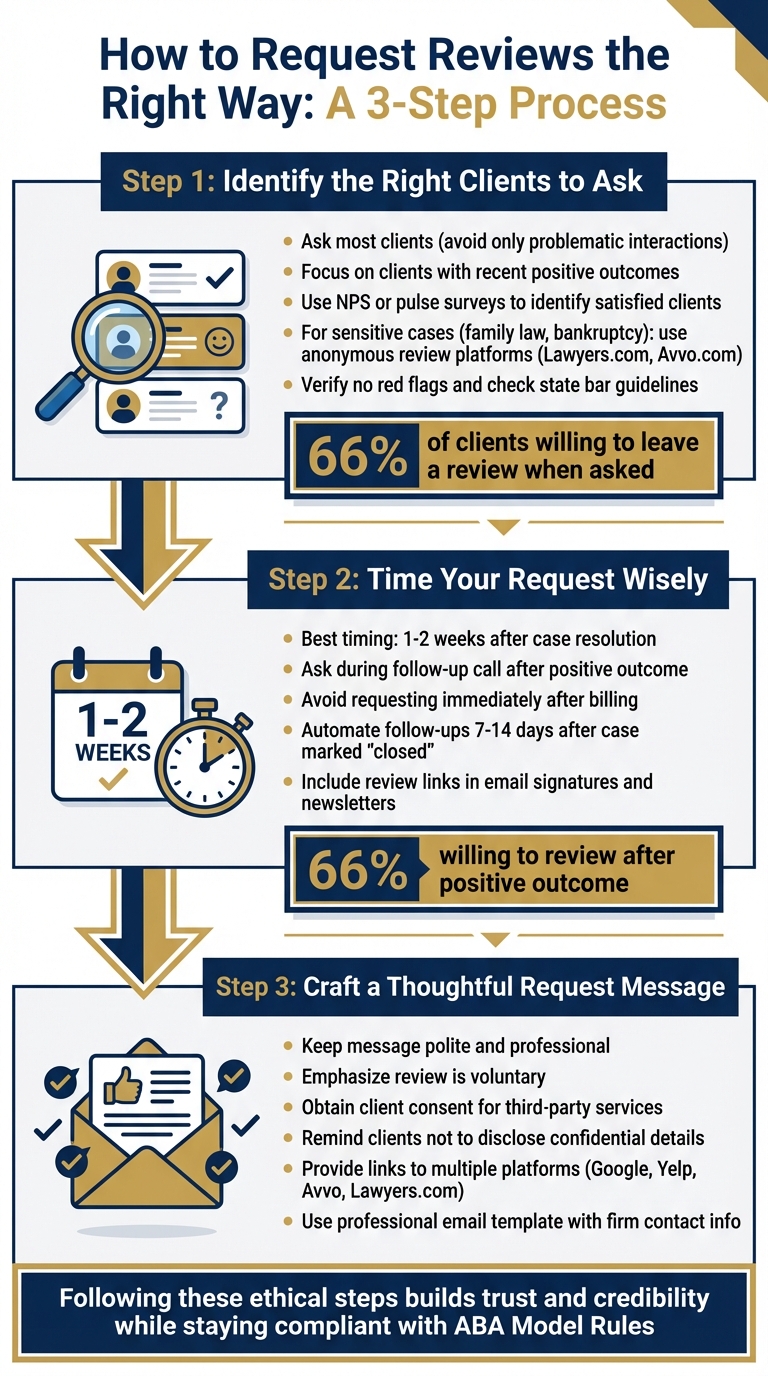
3-Step Ethical Process for Law Firms to Request Client Reviews
Step 1: Identify the Right Clients to Ask
It’s a good idea to ask most clients for reviews – except in cases where interactions were challenging or problematic. This approach helps you gather a wide range of honest feedback without appearing to cherry-pick only the most favorable responses. Focus on clients who recently experienced a positive outcome, such as a successful meeting or case resolution, as they’re more likely to leave encouraging feedback.
Tools like NPS (Net Promoter Score) or pulse surveys can help you identify satisfied clients. Pay special attention to those who’ve already expressed gratitude for your services. For sensitive areas like family law or bankruptcy, consider platforms that allow anonymous reviews, such as Lawyers.com or Avvo.com. Before reaching out, ensure there are no red flags, like dissatisfaction, and confirm that your request aligns with state bar guidelines.
Once you’ve refined your client list, focus on the timing of your review request.
Step 2: Time Your Request Wisely
Timing can make or break your review request. The best time to ask is within one to two weeks after a case is resolved, while the experience is still fresh in the client’s mind. Data shows that about 66% of clients are willing to leave a review when asked right after a positive outcome. For example, during a follow-up call to share a win, you could say, "I’m thrilled we achieved this outcome together. Would you mind sharing your experience to help others find us?".
Avoid sending requests immediately after billing, as financial matters can sometimes dampen a client’s enthusiasm. Instead, make review requests a routine part of your case wrap-up process. You can also use automated tools in your practice management software to send follow-ups via email or SMS, typically 7–14 days after marking a case as "closed". Including review links in email signatures and newsletters is another effective way to encourage feedback.
Once you’ve nailed the timing, focus on crafting a message that’s clear and respectful.
Step 3: Craft a Thoughtful Request Message
Your message should be polite, professional, and mindful of your client’s autonomy. Make it clear that leaving a review is entirely voluntary, and if you’re using third-party services, ensure you have the client’s consent. Also, remind clients not to disclose confidential details in their reviews.
Provide links to multiple trusted platforms – such as Google, Yelp, Avvo, and Lawyers.com – so clients can choose the one they feel most comfortable using. Include a direct link to your Google Business Profile along with straightforward instructions.
Start by asking for personal feedback, which can naturally lead into a formal review request. Use a professional email template that includes your firm’s contact information and maintains a respectful tone. This ensures consistency and compliance with advertising rules. By following these steps, you can request reviews ethically and effectively, all while building trust and credibility.
sbb-itb-50c3429
Using Review Management Tools While Staying Compliant
Review management tools can be a practical way to boost your firm’s reputation while adhering to ethical guidelines. These platforms are designed to streamline processes, ensuring you stay compliant without compromising client trust.
How Review Management Platforms Keep You Compliant
Platforms for managing reviews make it easier to follow ethical practices by automating tasks like obtaining informed consent and protecting client confidentiality. For example, they notify clients when their contact information is shared with a third-party service and explain how their feedback will be used. This aligns with ethical requirements such as Rule 1.6, which emphasizes confidentiality. Additionally, automated systems help avoid rash responses to negative reviews that might unintentionally disclose sensitive information.
These tools often route positive reviews to public platforms while directing less favorable feedback to private channels. For instance, the North Carolina State Bar‘s Formal Ethics Opinion 7 (October 2018) allows such automation, provided there’s clear consent and transparency about fees, data sharing, and posting practices.
"A client’s name and contact information are confidential and may not be revealed unless the client gives informed consent." – North Carolina State Bar
To maintain ethical standards, compliant platforms also ensure lawyers aren’t involved in drafting reviews. They offer standardized templates for responses, helping to maintain confidentiality, and monitor incentives to ensure they aren’t tied to the tone of the review.
Review Overhaul Features for Law Firms
Review Overhaul is an example of a platform that incorporates compliance-focused features tailored for law firms. It automates review requests by sending emails or texts after key case milestones, eliminating the need for in-person asks. The platform also provides professional tools for managing responses, offering templates to thank clients for positive feedback or address negative reviews constructively – without risking confidentiality.
Another standout feature is real-time alerts for new reviews, which help firms quickly identify and address potentially fake feedback. With pricing starting at $199 per month for basic reputation management and reaching $399 per month for comprehensive services like crisis response, Review Overhaul provides law firms with the tools to ethically manage reviews, comply with state bar regulations, and safeguard client information.
Conclusion
Requesting reviews the right way isn’t just about boosting your online presence – it’s about building trust and maintaining integrity. When you stick to ethical practices, you create a reputation that naturally draws in clients and builds long-term credibility.
Taking shortcuts with fake or manipulative review tactics can backfire in serious ways. Platforms like Google and Yelp can ban your business, the FTC might impose fines, and state bar associations could take action. Plus, it erodes the trust of your clients. By following ethical guidelines – like obtaining clear consent, respecting confidentiality, and avoiding any form of pressure – you show clients that their trust is more important than a perfect rating. This approach turns the process of requesting reviews into a way to strengthen relationships, not just a marketing strategy.
Having a clear, compliant system in place to request reviews from happy clients across various platforms can make a big difference. Plus, addressing any concerns privately before they turn into public complaints gives you a chance to resolve issues and build stronger client relationships.
When you prioritize ethical review practices, everyone benefits. Happy clients leave genuine feedback, potential clients see authentic testimonials, and your firm’s reputation grows naturally. By sticking to a structured and compliant approach, every review becomes a building block for an online presence that clients can trust and value.
FAQs
How can law firms ethically request client reviews?
Law firms can request client reviews ethically by sticking to essential professional standards. First and foremost, clients should provide feedback willingly, free from any pressure or expectation of rewards. Offering incentives, such as gifts, in exchange for reviews is not only frowned upon but also breaches ethical guidelines.
Transparency is another key element. Firms should clearly explain how client reviews might be used in marketing and ensure they have explicit consent before proceeding. Additionally, any reviews solicited must remain truthful and free from exaggeration or misleading claims. Upholding honesty and respecting client autonomy are crucial for maintaining trust and staying within legal and professional boundaries.
By following these practices, law firms can cultivate a trustworthy and ethical online presence.
How can law firms ethically request client reviews while following ABA guidelines?
Law firms can ethically request client reviews by following the guidelines set out in the ABA Model Rules of Professional Conduct. These rules highlight the importance of transparency, honesty, and respecting clients’ freedom to decide whether they want to participate. It’s crucial to avoid any actions that might mislead or pressure clients into leaving reviews. To reinforce this, firms can include a clear statement that reviews are entirely voluntary and not tied to the provision of legal services.
Proper training for staff who handle review requests is also essential. They should understand and adhere to ethical standards, steering clear of any behavior that could be seen as coercive. When it comes to responding to reviews – especially negative ones – law firms must prioritize client confidentiality and avoid actions that could escalate the situation. By sticking to these practices, firms can foster trust while staying within the ethical boundaries outlined by the ABA.
How can law firms request client reviews ethically?
Law firms can ethically gather client reviews by adhering to industry standards and leveraging tools designed for professional review management. Tools like Review Overhaul make it easier for law firms to collect client feedback, respond thoughtfully, and keep track of their online reputation – all while staying within ethical and legal boundaries. These platforms simplify the process and ensure compliance with the specific rules governing the legal profession.
To maintain ethical practices, law firms should avoid offering incentives for reviews or asking for feedback from friends, family, or employees. Such actions could breach review platform policies and legal guidelines. Instead, focus on establishing a consistent and transparent approach to requesting reviews from genuinely satisfied clients. This approach helps build trust and enhances your firm’s credibility online.
