Are negative search results costing you customers? That sinking feeling when a potential client Googles your business and finds an old complaint or bad review is a real problem for business owners like you. It’s not just frustrating; it’s a direct threat to your revenue and hard-earned reputation.
You've built your business with care, but a single negative link can define you in a potential customer's eyes. This isn't about ego—it's about letting your true quality shine through. We help you take back control of your online story so customers see the best of what you offer.
The result is a restored reputation that builds trust and drives growth. You'll move from worrying about what customers might find to feeling confident that your online presence accurately reflects the great work you do. Success means more customers, higher revenue, and the peace of mind that comes from a solid online reputation.
- "Review Overhaul didn't just bury our negative reviews; they helped us build a positive online presence that attracts new customers every week." – Local Restaurant Owner
- Our clients typically see a 22% increase in customer conversions after cleaning up their first page of search results.
It's time to stop losing customers to unfair search results. Schedule a free, confidential reputation audit today and get a clear plan to restore your good name.
How Negative Search Results Hurt Your Business
You know that sinking feeling when you imagine a potential customer searching for your business, only to find a negative review or an unflattering article? For many business owners, this isn't just a hypothetical fear. It’s a direct threat to their revenue and reputation, silently turning away new customers before they even connect.
This isn’t about ego—it’s about survival. When negative information dominates your search results, you’re letting a one-sided, often unfair, story define your brand.
The Silent Loss of Customers and Trust
For a local business, every single customer counts. The core problem with negative search results is that they create a trust deficit. In fact, research shows that businesses with just one negative article on the first page of Google can lose up to 22% of their potential customers.
Modern consumers are savvy researchers. Before they visit a restaurant or hire a contractor, they do a quick online search.
- Lost Revenue: Every potential customer who sees a negative result and clicks away is a direct hit to your income.
- Damaged Credibility: Negative press can quickly erode the trust you’ve spent years building in your community.
- Competitor Advantage: Those discouraged customers don't just disappear; they often go straight to your competitors.
Ignoring your online reputation is like leaving your front door wide open for competitors to walk right in and take your customers. The choice is simple: continue to lose business or take control of your narrative.
The Tangible Impact on Your Bottom Line
Let's walk through a real-world scenario. A potential new client hears about your law firm and decides to look you up online. The very first thing they see is a link to an old, resolved client complaint from years ago.
Instantly, a seed of doubt is planted. They decide it’s safer to go with another firm that has a cleaner online presence. You never even knew they were considering you. This exact situation plays out every day, creating a slow, steady drain on your growth.
Taking proactive steps to remove negative search results isn't just a defensive tactic—it's a fundamental business strategy for securing your future.
A Strategic Plan to Reclaim Your Reputation
Trying to remove negative search results from Google can feel overwhelming, but our simple 3-step plan makes all the difference. We guide business owners through this exact challenge, helping them move from a reactive panic to a proactive position of strength. This isn't just about damage control; it's about systematically rebuilding your online presence.
Here's how we help you do that.
Our Simple 3-Step Process
We've found the most effective way to tackle this is with a three-phase recovery plan. Each stage builds on the one before it, creating a comprehensive strategy that builds a more resilient brand for the long haul.
For a deeper dive, you can explore the nuances of how to fix your online reputation in our comprehensive guide.
Here's our simple plan:
- Step 1: Identification and Analysis: It all starts with a thorough audit. We identify exactly what’s out there and how bad the damage is before formulating a plan.
- Step 2: Removal and Suppression: With a clear picture, we pursue direct content removal. For everything else, the focus shifts to suppressing it with a flood of positive, authoritative content.
- Step 3: Proactive Brand Building: The final, most important phase is creating such a strong, positive online presence that your brand becomes insulated from future attacks.
The process is designed to give you back control.
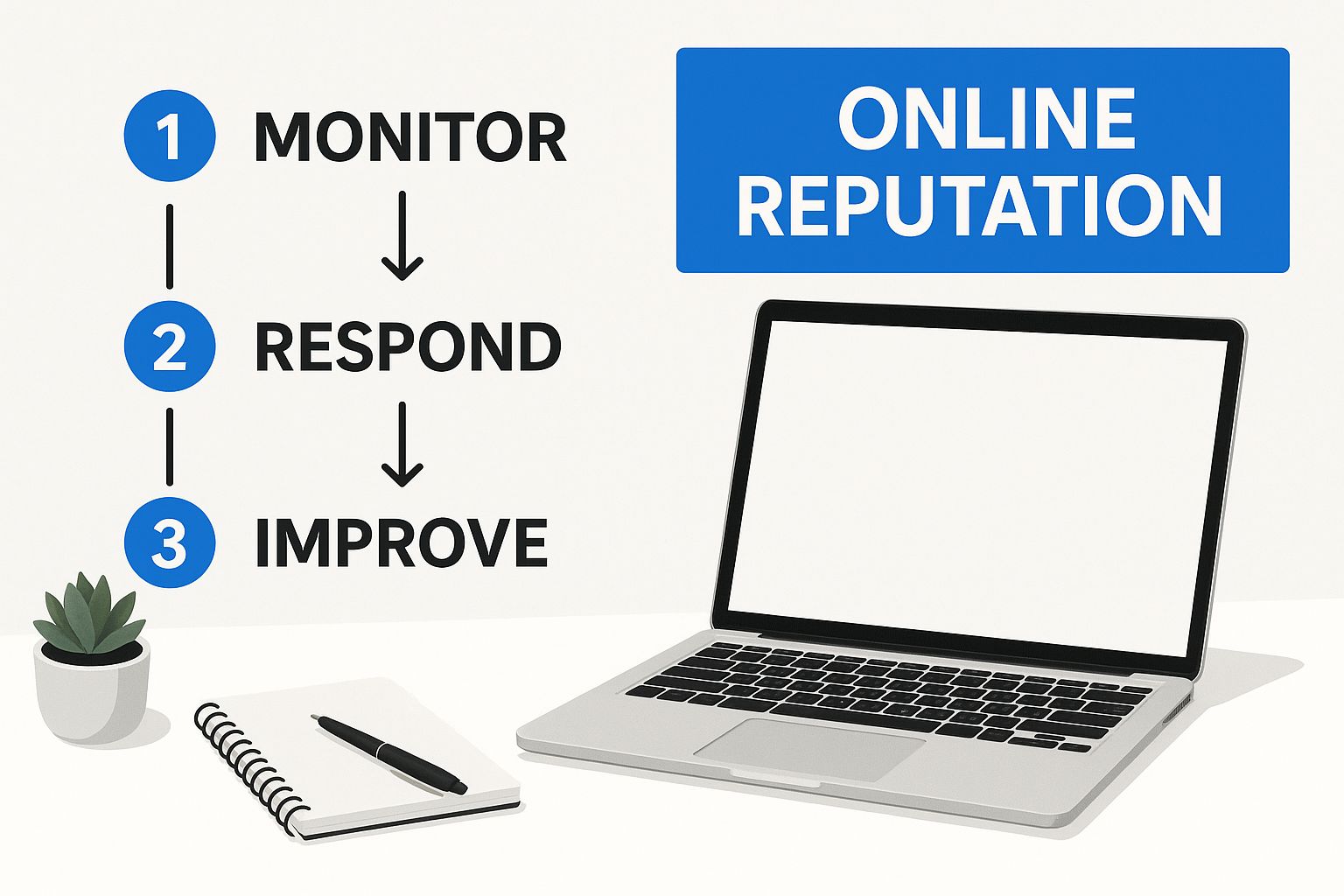
As you can see, our structured approach is designed to move you from assessment to ongoing brand enhancement, creating a powerful defense over time.
Understanding the Financial Stakes
Don't underestimate the real-world cost of a negative search profile. A single damaging link on the first page of Google is more than just an annoyance; it’s a direct hit to your bottom line.
Research consistently shows that a business with even one negative article ranking on page one can lose up to 22% of its customers. Think about that for a moment. Nearly one in four potential customers will see that result and choose a competitor instead.
Simply put, what customers find online directly impacts your revenue. Continuing to lose customers is the cost of inaction, while reclaiming your reputation leads to growth and peace of mind.
Online reputation management is a multifaceted discipline. It's a blend of public relations, search engine optimization (SEO), and social media strategy, all working together to shape how the public sees your brand. By following a clear plan, you can take control of that narrative.
While pushing down negative content is a solid long-term strategy, the best-case scenario is always getting it removed entirely. When you succeed in having damaging content taken down at the source, it's gone for good. This is by far the fastest and most thorough fix, but it's only on the table when the content clearly breaks the rules.
Success here almost always comes down to whether the content violates a platform's terms of service, infringes on your legal rights, or goes against Google's own content policies. Your first job, then, is to carefully evaluate the negative content against these criteria. It’s a methodical process that begins with pinpointing the exact violation and gathering the proof you need to build a solid case for removal.
Working Within Platform and Legal Frameworks
Most online platforms, from Yelp to Facebook, have extensive content policies. If a negative post uses hate speech, doxxes an employee by sharing private information, or steals your copyrighted material, you have a legitimate reason to request its removal. In these cases, you can file a formal complaint directly with the platform, pointing to the specific rule that was broken.
Beyond platform rules, legal avenues provide another powerful tool. For instance, data privacy laws have become a significant factor in online content removal. Regulations like Europe's "Right to be Forgotten" under GDPR give people the ability to ask search engines to remove links that are outdated, irrelevant, or cause undue harm, particularly if they no longer serve a public interest.
How to Write a Professional Takedown Request
What if the violation isn't so black and white? You can still try contacting the site owner or the author directly. This approach is far from a sure thing, but a polite, well-structured request can sometimes work wonders.
When you reach out, make sure your message includes these key elements:
- Be direct and specific. Clearly identify the content you want removed and provide the exact URL.
- Provide counter-evidence. If you're disputing facts, attach documentation that supports your claim.
- Stay professional. Keep your emotions in check. A calm, respectful tone will get you much further than accusations or angry demands.
Your goal is to make it easy for the website owner to see your point and agree to the removal. Issuing threats or ultimatums will almost certainly have the opposite effect.
This direct approach is one crucial piece of a much larger puzzle. By exploring every possible removal option, you’re taking an active role in shaping how the world sees your business.
Suppressing Unremovable Content with Positive SEO

Sometimes, getting negative content taken down just isn’t possible. In those cases, the strategy shifts from removal to replacement. This is where suppression becomes your best defense to remove negative search results from the front page.
The concept is straightforward. You create and promote a flood of positive, high-quality content that ranks higher than the negative link. This pushes the unwanted result down to the second, third, or even fourth page of Google—where fewer than 1% of searchers will ever see it.
Fortifying Your Owned Digital Properties
The first move in any suppression campaign is to build and strengthen the digital assets you own. These are the online platforms you have complete control over, and they form the foundation for your positive reputation.
This process revolves around publishing top-notch content that showcases your expertise. A solid grasp of What Is Search Engine Optimization is essential here, as you’ll be using these principles to outrank the negative material.
Start by focusing on these core assets:
- Your Official Website: This is your digital headquarters. Make sure it's fully optimized for your brand name and has a regularly updated blog.
- Key Social Media Profiles: Claim and actively manage your profiles on major networks like LinkedIn, Facebook, and X (formerly Twitter).
- New Supporting Websites: Consider creating additional sites you control, like a personal blog for your CEO or a microsite for a community project.
When you take command of your owned digital properties, you’re not just publishing content. You're building a digital firewall that protects your reputation and presents your brand in its best light.
Expanding Your Influence with Authoritative Content
With your own properties optimized, it's time to expand your reach. The next phase is all about getting positive content published on external, high-authority websites. This step is incredibly effective because Google already trusts these established platforms.
Your aim is to create a varied portfolio of positive mentions across the web. Think guest articles, interviews, positive media coverage, and well-written press releases. This approach is a cornerstone of effective online reputation management for small business.
To effectively suppress negative results, it's vital to create a variety of content types. Each one serves a unique purpose and has the potential to rank for your name or brand.
Effective Content Types for Suppressing Negative Results
| Content Type | Primary Purpose | Key Strategy |
|---|---|---|
| Blog Posts | Establish expertise and control the narrative on your owned website. | Optimize for brand keywords and publish consistently. |
| Guest Articles | Leverage the authority of established industry publications. | Secure placements on high-domain-authority sites. |
| Press Releases | Announce newsworthy events and create official records. | Distribute through reputable newswires for broad reach. |
| Social Media Profiles | Dominate the top search results for your brand name. | Fully optimize and actively maintain profiles on all major platforms. |
| Video Content | Engage audiences and rank on both Google and YouTube. | Create professional "About Us" videos, interviews, and tutorials. |
| Positive Reviews | Build social proof and improve local search visibility. | Encourage satisfied customers to leave feedback on key review sites. |
By strategically deploying these different content formats, you create a powerful and diverse set of positive assets that can systematically push down unwanted search results.
What Success Looks Like for Your Business
Think about the first thing a potential customer does before deciding to work with you. They’ll almost certainly search for your business online. Success means they find a first page full of positive stories, stellar testimonials, and your own professional content.
When you take control of your search results, you fundamentally change the narrative for every new customer. You get to define that critical first impression.
The Tangible Returns of a Strong Reputation
A positive online presence is a tangible asset that directly impacts your bottom line. It delivers measurable results, drives revenue, and builds a far more resilient business.
We once worked with a local restaurant that was haunted by a single negative news article. After we successfully suppressed it, they saw a 30% increase in online reservations within just three months. They didn't change their menu or their staff; they simply changed what new customers found first.
This kind of work translates into several key benefits:
- Higher Customer Trust: A clean search profile builds instant credibility and helps you win business over a competitor.
- Improved Conversion Rates: When people find positive content, they arrive at your website ready to become paying customers.
- Ability to Attract Top Talent: The best candidates research a company's reputation before applying. A positive image makes you an employer of choice.
"A great reputation is more valuable than money." – Publilius Syrus. Today, your Google search results are your reputation. Investing in them yields returns that go far beyond the initial cost.
Shifting from Defense to Offense
Ultimately, success means you're no longer losing sleep over that one damaging link. You can stop playing defense and start focusing your energy on proactively growing your company with confidence.
That's the real end goal: to build a digital presence so robust and positive that it not only buries old problems but also protects you from future ones. It’s about creating a brand that customers trust and competitors respect.
It’s Time to Take Control of Your Online Reputation
We’ve walked through the damage that negative search results can inflict and laid out a clear plan to address the problem. You can let inaccurate search results continue to define your brand, or you can decide to take back the narrative.
The stakes are real. Will you keep losing potential customers who get a poor first impression online? Or will you build a strong reputation that not only drives growth but gives you genuine peace of mind?
Deciding to act is the most important step you can take. It’s how you ensure that when new customers search for you, they see the very best your business has to offer.
Charting Your Path Forward
Taking that first step might feel overwhelming, but you don't have to navigate it alone. The best way to start is with a simple, no-obligation consultation to get an expert analysis of your online presence and a clear, actionable roadmap.
For a deeper dive into the strategies that will help you regain control, I highly recommend reading this comprehensive small business online reputation management guide. It offers fantastic context for the work ahead.
True success means turning your online presence from a potential liability into one of your most powerful assets. It’s about building a digital reputation you can genuinely be proud of.
Part of your long-term plan will involve mastering every angle of reputation management. A crucial skill is knowing how to respond to negative reviews, which we cover in detail.
When you're ready, schedule your free, confidential audit to get started.
Frequently Asked Questions
When you're trying to remove negative search results, a lot of questions come up. As an expert in this field, I've heard them all, and I want to give you the clear, straightforward answers you need to move forward with confidence.
Let's tackle some of the most common questions business owners ask when they're working to reclaim their reputation.
How Long Does It Take to See Results?
This is usually the first thing people want to know, and the honest answer is: it depends on the strategy.
If you're able to get a direct removal, you could see that negative result disappear in just a few weeks. But that's the best-case scenario and, frankly, not the most common one.
A more predictable and reliable approach is suppression. With a solid suppression campaign, you can expect to see real, positive movement in your search results within three to six months. Keep in mind, this timeline can shift depending on how authoritative the negative website is.
Can You Permanently Delete Something from the Internet?
This question gets at the heart of how the internet works. While you can't always force a third-party website to delete a page, you can make it invisible where it counts: on Google.
The goal isn't necessarily to erase the content from existence but to get it de-indexed by search engines. Once Google removes a page from its index, it’s practically gone for 99% of people. It won't show up when someone searches for your name, which is the most effective and permanent solution for protecting your reputation.
The objective isn't just to remove content but to make it undiscoverable. De-indexing a negative link from Google achieves this, effectively neutralizing its threat to your business.
Is Reputation Management Different from SEO?
Yes, and this is a crucial distinction. While they both use similar tools, their goals are entirely different. Online reputation management is a highly specialized practice. If you want to dive deeper, we cover the importance of online reputation management in a separate guide.
Think of it this way:
- Traditional SEO aims to rank a website for general keywords related to products or services (like "best plumber in Austin"). Its goal is to attract new customers.
- Reputation Management focuses exclusively on controlling the search results for your specific brand name. The goal is to build trust and ensure that what people find is positive and accurate.
Ready to take the first step toward a cleaner online reputation? The team at Review Overhaul is here to help. Schedule your free, no-obligation reputation audit today to get a clear, actionable plan. https://reviewoverhaul.com
