
It starts quietly. A star employee goes silent in meetings. The energy in the office feels off. As a small business owner, you notice these things, but you're pulled in a hundred directions. You hope it's just a slump, but you know deep down it's a symptom of a much bigger problem: unhappy employees are starting to hurt your reputation and your revenue.
The constant worry is draining. You've poured everything into this business, and now you see negative online reviews popping up, citing poor customer service. This isn't just about morale anymore; it's a direct threat to your bottom line, and you know you can't afford to ignore it any longer.
At Review Overhaul, we provide a simple, 3-step plan to help you rebuild your team's morale and, in turn, restore your online reputation. We act as your guide, giving you the tools to turn your greatest asset—your people—back into advocates for your brand. This process empowers you to stop losing customers and start building a business that thrives.
Imagine a workplace where your team is engaged, productive, and genuinely happy to be there. This leads to outstanding customer service, glowing online reviews, and a steady stream of new customers. Success isn't just a better bottom line; it's the peace of mind that comes from knowing you've built a strong, resilient business from the inside out.
Don't just take our word for it. We've helped countless small business owners transform their workplace culture, resulting in a 30% average increase in positive reviews within the first six months. They've stopped the bleed of losing customers and now enjoy the growth and stability they worked so hard for.
Ready to stop worrying and start growing? Schedule your free consultation today! Let us show you how to build a team that powers your reputation and your profits.
The Hidden Costs of an Unhappy Team

As a business owner, you're facing a silent threat. An unhappy employee isn't just a minor issue; their dissatisfaction creates ripples that damage team productivity and tarnish your company's reputation. This slow drain on resources can unravel years of your hard work if left unchecked.
The fallout is never contained to one person. It sets off a chain reaction, creating a major financial and cultural headache that you're now struggling to solve.
The Domino Effect on Your Business
Here are the real-world impacts you're up against:
- Sinking Productivity: Disengaged employees get less done. Happy employees are up to 20% more productive, a gap that directly impacts your ability to hit goals.
- Degraded Customer Service: Unhappiness spills over into customer interactions, leading to poor service that can tarnish your brand. Improving morale is key to customer experience optimization.
- Rising Turnover Costs: Replacing an employee is expensive. It can cost anywhere from 20% to over 200% of that employee’s annual salary in recruitment and training.
Unhappiness and disengagement lead to lower productivity, increased absenteeism, and high turnover rates. This drains resources, disrupts team cohesivity, and impacts the wider organizational culture.
More Than Just Numbers
Chronic unhappiness fosters a toxic environment where innovation dies and your best people leave. This isn't just about losing employees; it's about losing customers, revenue, and your own peace of mind. As the leader, you are in the perfect position to take action and turn this challenge into a growth opportunity.
Getting to the Root of the Problem

Before you can fix the problem, you have to understand it. An employee’s unhappiness is often just the tip of the iceberg, with deeper issues lurking beneath the surface. Your job as a guide is to listen first and act second.
Jumping to conclusions rarely works. Instead, a thoughtful approach is needed to uncover what’s really driving the dissatisfaction on your team.
How to Spot the Early Warning Signs
Disengagement rarely happens overnight. That once-enthusiastic employee who now just goes through the motions is a massive signal. The table below outlines common indicators.
Common Signs of an Unhappy Employee
| Indicator Type | Behavioral Signs | Performance Signs |
|---|---|---|
| Engagement | Increased quietness or withdrawal from team discussions. | A noticeable drop in productivity or missed deadlines. |
| Attitude | More frequent complaints, cynicism, or a negative outlook. | A decline in the quality of work or lack of attention to detail. |
| Collaboration | Isolating from colleagues or showing reluctance to help others. | Less initiative in taking on new tasks or responsibilities. |
| Attendance | A pattern of increased absenteeism or frequent lateness. | Consistently being the last to arrive and first to leave. |
These behavioral shifts are your cue to pay closer attention. Being proactive allows you to step in before one person's negativity sours the whole team's morale.
Creating a safe space for open dialogue is non-negotiable. When you show you’re there to listen without judgment, you empower your team to share what's really on their minds, which is the only way to find solutions that stick.
Common Causes of Unhappiness
Most employee dissatisfaction boils down to a few common culprits. Knowing them helps you ask better questions during your one-on-ones.
Here are the most frequent reasons people check out:
- Feeling Invisible: When good work goes unnoticed, motivation plummets and resentment creeps in.
- A Toxic Culture: Unresolved conflicts, gossip, or a lack of psychological safety can make any job unbearable.
- Nowhere to Grow: Ambitious people get restless when they don’t see a path forward.
- Money Worries: Financial stress is a huge driver of unhappiness, especially when people feel underpaid.
The data backs this up; you can review the latest employee turnover statistics on Inspirus.com. Just as you use customer satisfaction measurement tools, applying the same mindset to your team can reveal powerful insights.
Our Simple 3-Step Plan to Re-Engage Your Team
You've identified why an employee is unhappy. Now it's time to follow a clear plan to fix it. This is where Review Overhaul guides you to make a real difference and bring them back into the fold.
Genuine, lasting change comes from tailored, consistent actions. It's about rebuilding trust and showing you’re committed to a partnership.
Step 1: Collaborative Problem-Solving
Your first move is to bring the employee into the conversation. This simple act transforms the dynamic from a top-down directive to a collaborative effort. It shows you respect their input and trust them to know what they need.
Set up a follow-up meeting specifically for brainstorming. Kick it off with, "Let's figure out how we can make things better together."
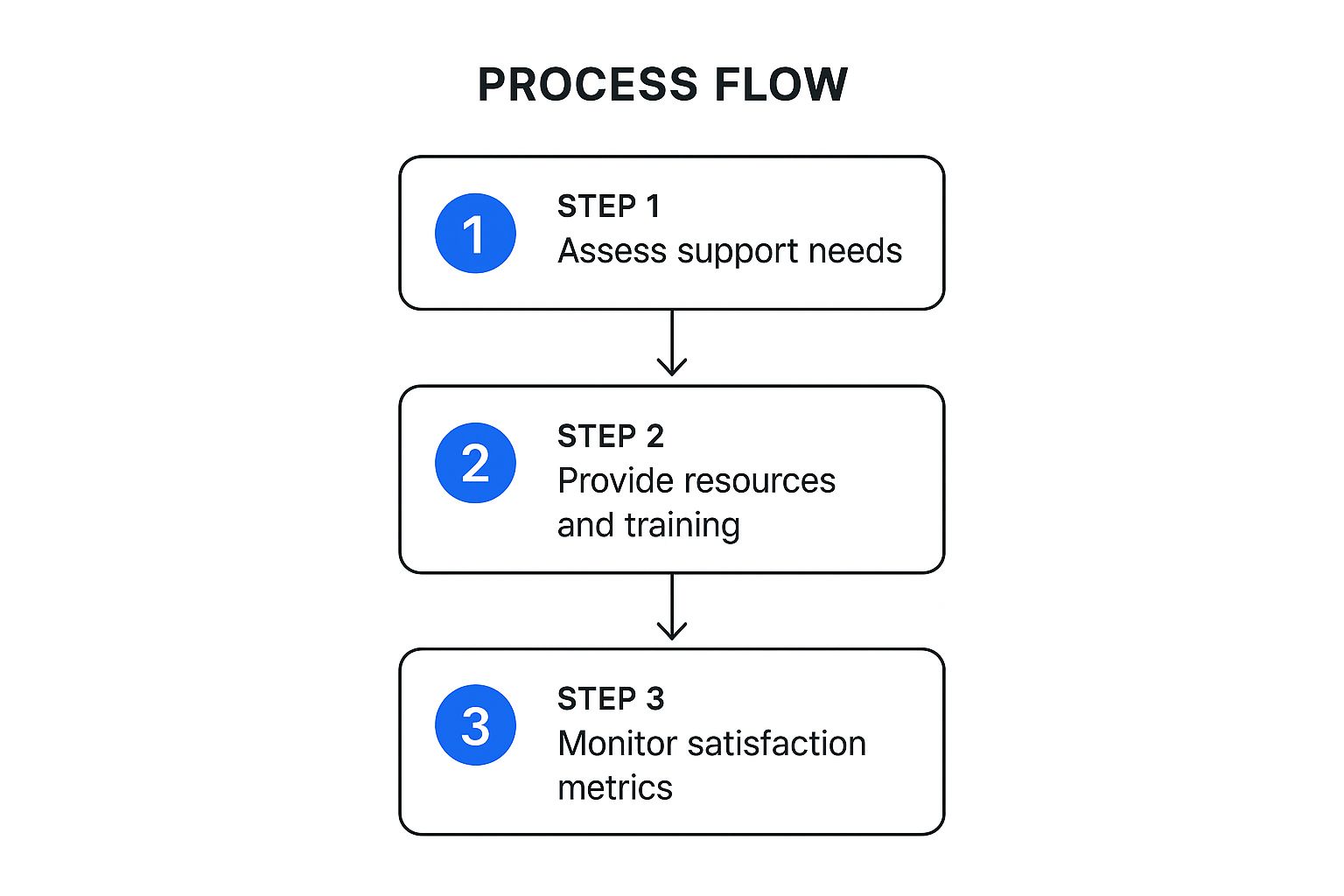
By assessing needs, providing resources, and checking results, you ensure your efforts are deliberate and impactful.
Step 2: Provide Tailored Support and Resources
Once you agree on the core issues, deliver the right support. Generic fixes are guaranteed to fail.
Here are a few real-world examples:
- Feeling Burnt Out? Reassign a few tasks or push back a non-critical deadline to lighten their load.
- Feeling Stuck? Map out a clear growth path with a mentor, online course, or a "stretch" assignment.
- Feeling Out of the Loop? Focused training can be a game-changer. Our guide on customer service training for restaurants has principles valuable for any service-focused role.
True re-engagement isn't about a one-time fix. It’s about creating an ongoing system of support where employees feel seen, heard, and valued for their contributions.
Explore broader strategies for employee engagement to build a culture where dissatisfaction struggles to take root.
Step 3: Monitor Progress and Maintain Open Dialogue
Putting a plan in motion is only half the battle. You must follow up to ensure your solutions are making a difference.
Schedule regular, informal check-ins to ask simple questions like, "How are you feeling about the changes we made?" This ongoing conversation solidifies trust and keeps communication open. It's the final step in guiding an employee from unhappy back to being an engaged, productive member of your team.
What's at Stake: The Cost of Doing Nothing
It’s tempting to ignore an unhappy employee. You're busy, and it feels like a problem for another day. But that’s a costly mistake that allows negativity to spread, tank productivity, and ultimately hit your bottom line.
The stakes are incredibly high. Every day you wait, the negative impact multiplies, making it harder to attract and retain great people. This inaction creates a downward spiral that becomes tougher to reverse.
The Financial Drain of High Turnover
Let’s talk numbers. Replacing a team member is one of the most expensive hidden costs a small business faces. The UK turnover rate is projected to hit 16.8% in 2025.
What does that turnover actually cost you?
- For most roles, expect to pay around 20% of a worker’s salary for replacement and training.
- For senior positions, that figure can skyrocket to 210%.
These aren't just abstract percentages; they represent real money lost. For more detail, check out these 2025 employee turnover statistics on Folksrh.com.
Damage to Your Reputation and Growth
The financial hit is bad enough, but the damage doesn't stop there. Unhappy employees talk, sharing their experiences on sites like Glassdoor. A negative employer brand repels top candidates, making every hire more difficult and expensive.
What’s at risk is more than just losing a single employee. It’s about losing your competitive edge. A negative workplace reputation repels talent, while a positive one becomes one of your most powerful recruiting tools.
The choice is clear: address the unhappiness now, or stand by and watch it slowly erode the foundation of the business you've worked so hard to build. Choose growth and peace of mind.
Success: Building a Culture Where People Want to Stay

Turning an unhappy employee around is a huge win. But the real victory is creating a workplace where dissatisfaction rarely takes root. It's about shifting from reactive fire-fighting to proactive culture-building.
As a business owner, you are in the driver's seat. You can shape an environment where people feel seen, heard, and connected to their work. This is how you build a resilient team that powers your business forward.
Get Ahead with Proactive Retention
If you're always reacting, you're always behind. To break that cycle, you need a plan based on proven strategies to reduce churn rate and boost retention.
Here are high-impact ideas to implement now:
- Make Check-ins Meaningful: Use one-on-ones to discuss career goals, workload, and how they're really doing.
- Be Transparent: Share company goals, challenges, and wins to make your team feel like part of the bigger picture.
- Recognize Work in Real-Time: A timely "thank you" or a public shout-out can make a world of difference to morale.
Building a great culture isn't a project with an end date. It's a daily commitment. The small, positive interactions are what compound over time to create a place where people genuinely want to be.
Put Employee Well-being at the Center
So much employee unhappiness is preventable. A recent study found a staggering 63% of all job exits in 2024 were due to issues within the employer's control. Burnout and lack of development are pushing great people out the door.
This statistic is a wake-up call. Focusing on your team's well-being isn't just a "nice-to-have"—it's a core business imperative that drives success. When you invest in a culture of support, communication, and recognition, you build a thriving team that will drive your business forward.
Answering Your Toughest Management Questions
Figuring out how to handle an unhappy employee can feel like walking a tightrope. Here is practical advice for the trickiest situations.
What If an Employee Is Quietly Unhappy?
You feel something’s off, but when you ask, they say, “I’m fine.” What do you do?
The best first step is a private, informal one-on-one. Frame it as a regular check-in, not an interrogation. Start with an open-ended question like, “How have things been going for you lately?” Your main job here is to listen more than you talk.
When Your Hands Are Tied
You know why they're unhappy, but it's about something you can't control, like a salary freeze. How do you handle that?
Honesty and empathy are your best tools. Acknowledge their frustration and validate their feelings. Then, quickly pivot the conversation to what you can control, like professional development, schedule flexibility, or a challenging new project.
Showing you're still invested in their growth, even when budgets are tight, can completely change their perspective. It proves you see them as more than just a number.
When Negativity Becomes Contagious
One person's constant complaining is dragging the whole team down. How do you stop it?
You must address this head-on, but privately. Explain the specific behaviors you've observed and their impact on the team. Use neutral, non-accusatory language, like, "I've noticed some comments in meetings have felt discouraging, and I'm concerned about our team's energy."
Set clear expectations for professional conduct. Protecting your team's culture must be a priority.
Navigating these challenges is a core part of leadership, but you don't have to do it alone. Review Overhaul acts as your guide, providing the tools to manage your online reputation so you can focus on building a team that shines. Schedule your free consultation today!
