
Are you a practice owner watching negative patient reviews cost you customers and revenue? It's a frustrating position. You pour everything into providing excellent care, but logistical hiccups or communication gaps lead to poor online feedback that undermines your hard work.
This isn't just about a few unhappy comments; it's about the financial health and future of your practice. You're losing potential patients who see those reviews and choose a competitor, and you're struggling to build the trusted reputation you deserve. The stakes are high: continue losing customers or take control to achieve growth and peace of mind.
Your Path to a 5-Star Reputation
The good news is, you don't have to navigate this alone. As your trusted guide, Review Overhaul has a simple 3-step plan to help you, the hero of this story, transform your patient experience and rebuild your online reputation.
- Optimize the Patient Journey: We'll help you implement proven strategies to fix the root causes of negative feedback, from long wait times to unclear communication.
- Encourage Positive Feedback: We'll show you how to systematically gather and showcase the positive experiences your happy patients have every day.
- Manage Your Online Presence: We'll equip you with the tools to monitor your reputation and respond effectively, turning potential crises into opportunities.
The Results: More Patients, Less Stress
Imagine a practice where new patients find you because of your stellar online reviews. Picture a waiting room full of people who feel heard, respected, and confident in their care. This is what success looks like: a better reputation driving more sales and giving you the freedom to focus on what you do best—providing outstanding healthcare.
Trusted by Practices Like Yours
"Before working with Review Overhaul, we were constantly fighting an uphill battle with online reviews. Their system not only helped us improve our patient satisfaction scores by 30% but also gave us a clear path to becoming the top-rated practice in our area. Our new patient bookings have increased by over 20%." – Dr. Jane Smith, Smith Family Dental
1. Reduce Wait Times and Improve Scheduling Efficiency
Long waits are more than just an inconvenience; they are a major source of patient frustration and anxiety. When a patient's appointment starts significantly late, it sends a message that their time isn't valued. This is a crucial, yet often overlooked, component of the patient experience.
By actively managing your schedule, you transform a potential negative into a powerful positive. This demonstrates efficiency and respect from the very first interaction.
Actionable Strategies for Efficient Scheduling
Implementing a system that respects your patients' time is achievable with a few strategic adjustments. Start by analyzing appointment data to identify peak hours and common causes of delays.
- Morning Huddles: Start each day with a brief team meeting to review the schedule and anticipate potential bottlenecks.
- Standardize Appointment Slots: Create standardized appointment lengths based on the visit type to improve accuracy.
- Proactive Communication: Train staff to immediately inform patients of any delays. Providing a reason and an estimated new wait time can significantly reduce frustration.
- Virtual Waiting Rooms: Consider technology that allows patients to wait in their car, sending a text when it's their turn.
This infographic summarizes the key metrics to track when evaluating your scheduling performance.
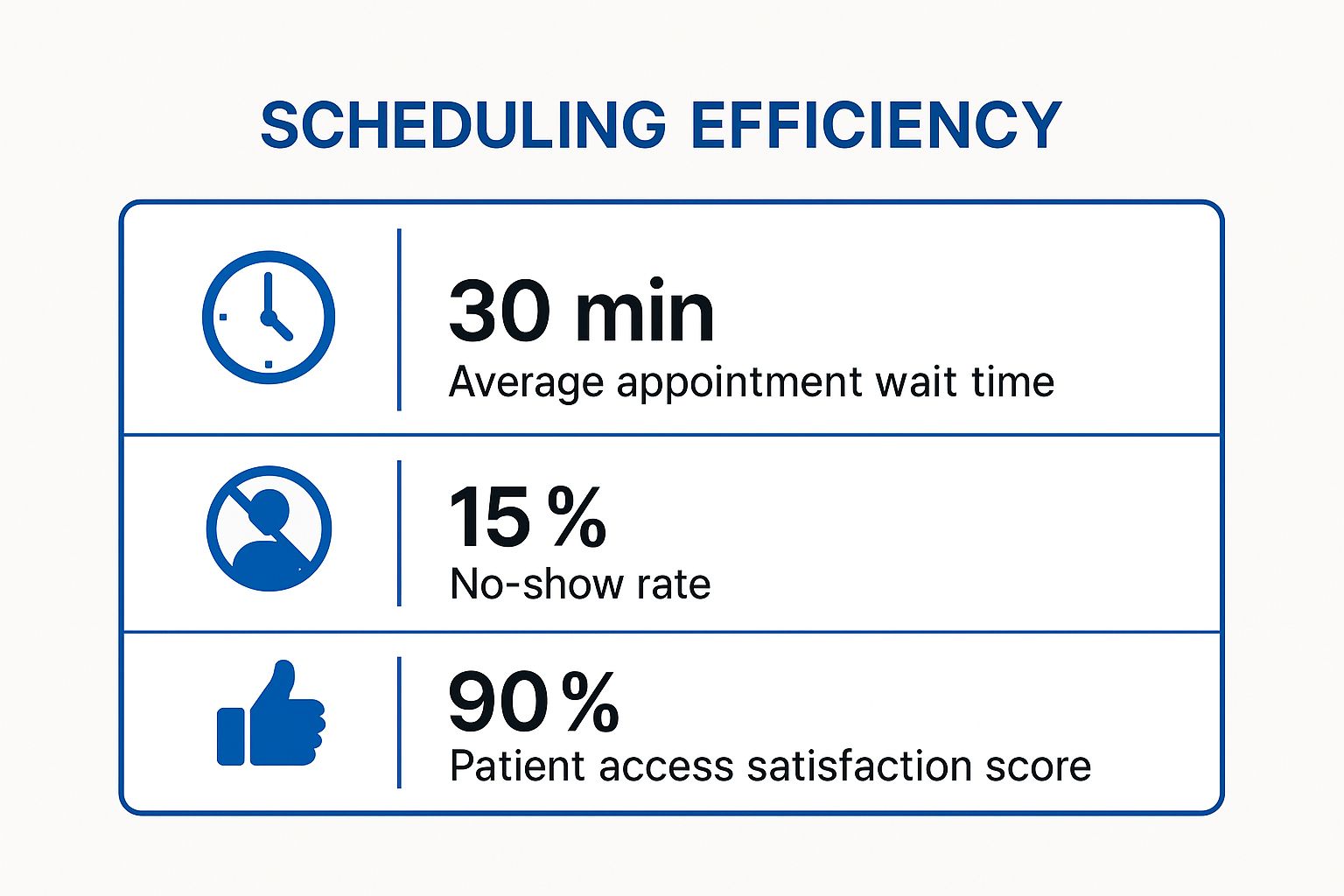
Monitoring these numbers gives you a clear, data-backed view of where improvements can be made to boost efficiency and patient happiness.
2. Enhance Communication and Active Listening
Effective communication is the cornerstone of the patient-provider relationship. When patients feel truly heard and understood, their trust and willingness to follow treatment plans increase dramatically.
Prioritizing clear, empathetic communication builds a strong foundation of trust. This directly translates into higher patient satisfaction and better health outcomes.

Actionable Strategies for Empathetic Communication
Training your entire staff in proven communication techniques can transform your practice's culture. For instance, Johns Hopkins Hospital saw a 25% drop in patient complaints after training physicians in empathetic communication.
- Sit Down During Consultations: Simply sitting at eye level with the patient makes you appear less rushed and more engaged.
- Use the Teach-Back Method: After explaining a plan, ask the patient to repeat it back to ensure they understand.
- Acknowledge Emotions: Phrases like, "I can see this is concerning for you," validate a patient's feelings and build rapport.
- Avoid Medical Jargon: Use simple language to explain complex conditions, ensuring patients fully comprehend their health status.
This approach is a strategic element of customer experience optimization that leads to measurable improvements in care and loyalty.
3. Implement Patient-Centered Care Models
Moving beyond the traditional "doctor knows best" approach, patient-centered care places the patient at the heart of every decision. This model respects individual preferences and values, treating patients as active partners in their health journey.
By adopting this model, you shift from treating a condition to caring for a person. This fundamental change is a powerful way to increase patient satisfaction and build trust.
Actionable Strategies for Patient-Centered Care
Implementing a patient-centered model involves a cultural shift supported by practical changes. The goal is to create a system where patient input is actively sought and integrated into the care plan.
- Create Advisory Councils: Form patient and family councils to provide direct feedback on clinic policies and communication strategies.
- Use Shared Decision Aids: Provide tools like videos or pamphlets that clearly explain treatment options, risks, and benefits.
- Ask "What Matters to You?": Train staff to go beyond "What's the matter?" and ask patients about their personal goals and priorities.
- Conduct Inclusive Rounds: In hospital settings, ensure bedside rounds actively involve the patient and their family.
This commitment to patient partnership boosts satisfaction and strengthens your practice's standing in the community, a key component of effective reputation management strategies for healthcare providers.
4. Improve Physical Environment and Amenities
A patient's experience begins the moment they walk through your doors. The physical environment sends a powerful message about the quality of care they can expect. A clean, comfortable, and welcoming space can significantly reduce patient anxiety.
Improving your practice's environment is one of the most tangible ways to increase patient satisfaction. You show patients you care about their holistic well-being, not just their medical treatment.
Actionable Strategies for an Enhanced Environment
Creating a healing environment doesn't always require a major renovation. For instance, Kaiser Permanente’s facilities with healing gardens have been linked to faster recovery times.
- Incorporate Natural Elements: Add plants, water features, or nature-themed artwork to reduce stress and pain perception.
- Prioritize Comfort and Cleanliness: Ensure waiting areas have comfortable seating with access to charging stations and WiFi.
- Use Calming Aesthetics: Paint patient areas in soothing colors like blues and greens and use sound-absorbing materials to control noise.
- Improve Signage and Accessibility: Ensure signage is clear and easy to read to help patients navigate your facility without stress.
5. Leverage Technology and Digital Health Tools
In today's connected world, patients expect convenience from their healthcare provider. Leveraging digital health tools like patient portals and telemedicine is a fundamental way to increase patient satisfaction by offering accessibility and control.

When you empower patients with easy access to their health information, you meet their modern expectations. This transforms the patient experience into a continuous, supportive healthcare journey.
Actionable Strategies for Digital Integration
Adopting technology is about integrating it seamlessly into your practice. Kaiser Permanente conducts over 50% of appointments virtually with satisfaction scores above 90%, showing the immense potential of a well-executed digital strategy.
- Offer a Robust Patient Portal: Provide a secure online portal where patients can view lab results, request refills, and communicate with your team.
- Embrace Telemedicine: Use video visits for follow-ups and consultations when an in-person exam isn't necessary.
- Ensure Mobile Accessibility: All digital tools, from your website to your patient portal, must be user-friendly on smartphones.
- Provide Comprehensive Support: Train your staff to be technology ambassadors who can confidently guide patients through your digital offerings.
6. Train and Empower Staff in Customer Service Excellence
The quality of patient care is defined by every single interaction. This means your front desk staff and billing coordinators are as crucial to patient satisfaction as your providers.
When staff feel confident, valued, and empowered to solve problems, they create a welcoming atmosphere. This directly impacts how patients perceive their care.
Actionable Strategies for Building a Service-Oriented Team
Creating a culture of service excellence requires a dedicated effort. Renowned institutions like the Cleveland Clinic with its 'Patients First' program have demonstrated this focus is a key driver of top-tier patient satisfaction.
- Implement Comprehensive Training: Adapt successful hospitality principles from customer service training in other industries for your healthcare setting.
- Empower Problem-Solving: Give your staff the autonomy to resolve minor patient issues on the spot without needing managerial approval.
- Create Service Recovery Protocols: Establish a clear process for what to do when things go wrong to ensure a consistent, empathetic response.
- Celebrate Success: Implement a peer recognition program to highlight team members who go above and beyond for patients.
For deeper insights, consider perspectives from a dedicated healthcare keynote speaker.
7. Implement Comprehensive Care Coordination and Transitions
The journey through the healthcare system rarely involves just one stop. Transitions between different care settings are often confusing for patients, which is where care coordination becomes a game-changer.
When a patient feels supported and guided through these transitions, it prevents them from feeling lost. You show patients you are invested in their entire care journey.
Actionable Strategies for Seamless Transitions
Creating a system that ensures no patient falls through the cracks is crucial. Boston Medical Center's program, for example, reduced readmissions by 33% through well-managed transitions.
- Assign a Care Coordinator: For high-risk patients, assign a dedicated coordinator to act as a single point of contact.
- Use the "Teach-Back" Method: Before discharge, have patients explain their care plan back to you to confirm their understanding.
- Proactive Follow-Up Calls: Call every discharged patient within 48 hours to check on their recovery and answer new questions.
- Schedule Next Steps Before They Leave: Book their next appointment before they walk out the door to ensure continuity.
8. Actively Collect and Act on Patient Feedback
Asking for feedback and then doing nothing with it is worse than not asking at all. Actively collecting and acting on patient feedback creates a powerful continuous improvement loop.
When patients see their suggestions lead to tangible changes, it builds trust and loyalty. This proactive approach transforms the patient from a passive recipient of care into an active partner.
Actionable Strategies for a Feedback-Driven Culture
Creating a system to listen and respond is simpler than you might think. The key is to make providing feedback easy and to demonstrate that you are listening.
- Offer Multiple Channels: Use a mix of methods like email surveys, in-office comment cards, and patient councils.
- Act with Urgency: Train staff to respond to negative feedback quickly, ideally within 24-48 hours.
- Close the Loop: Publicly communicate changes you've made based on patient suggestions with "You spoke, we listened" updates.
- Empower Your Team: Use data from customer feedback management systems to pinpoint specific areas for targeted training.
9. Enhance Price Transparency and Billing Processes
Financial stress is a significant, yet often unaddressed, part of the patient journey. Unexpectedly high bills or confusing statements can quickly sour an otherwise positive clinical experience.
By providing clear, upfront information about costs, you remove financial ambiguity. This simple act of transparency demonstrates respect and builds trust.
Actionable Strategies for Clearer Billing
Demystifying healthcare costs is achievable. Practices like Sutter Health saw a 25% drop in billing complaints after improving transparency.
- Provide Cost Estimates Upfront: Train your team to provide clear cost estimates when patients book their appointments.
- Create Easy-to-Understand Bills: Redesign your statements to use plain language and clearly itemize charges.
- Offer Flexible Payment Solutions: Implement systems that accept online payments and offer interest-free payment plans.
- Train Staff for Financial Conversations: Equip your team to discuss costs with compassion and confidence.
Learn more about the importance of healthcare pricing transparency. Managing these interactions well is a key component of effective reputation management for doctors.
9 Strategies to Boost Patient Satisfaction
| Strategy | Implementation Complexity | Resource Requirements | Expected Outcomes | Ideal Use Cases | Key Advantages |
|---|---|---|---|---|---|
| Reduce Wait Times and Improve Scheduling Efficiency | Moderate to High (tech & training) | Technology systems, staff training, monitoring | Shorter wait times, higher patient satisfaction, reduced no-shows | Busy clinics, high patient volume settings | Improves operational efficiency and patient flow |
| Enhance Communication and Active Listening | Moderate (training & culture change) | Ongoing staff training, time investment | Stronger patient-provider trust, better adherence, fewer errors | Practices emphasizing patient engagement | Builds trust, reduces errors, enhances engagement |
| Implement Patient-Centered Care Models | High (cultural shift, systemic) | Multidisciplinary teams, care coordination resources | Personalized care, higher satisfaction, better outcomes | Organizations aiming for holistic care delivery | Increases adherence, reduces unnecessary procedures |
| Improve Physical Environment and Amenities | High (capital investment) | Facility renovations, maintenance | Reduced stress, improved clinical outcomes, positive impressions | Hospitals and clinics focusing on patient comfort | Enhances healing environment, attracts patients |
| Leverage Technology and Digital Health Tools | Moderate to High (integration) | Digital platforms, tech support | Increased access, convenience, patient empowerment | Facilities adopting telehealth and digital tools | Improves access, communication, and adherence |
| Train and Empower Staff in Customer Service Excellence | Moderate (training programs) | Training resources, ongoing reinforcement | Consistent positive experiences, better staff morale | Healthcare organizations focused on service quality | Enhances patient satisfaction and staff engagement |
| Implement Comprehensive Care Coordination and Transitions | High (coordination across systems) | Care coordinators, communication infrastructure | Reduced readmissions, improved continuity, fewer errors | Hospitals managing complex patient transitions | Prevents gaps in care, reduces readmissions |
| Actively Collect and Act on Patient Feedback | Moderate (systems & analysis) | Feedback platforms, analysis teams | Data-driven improvements, patient empowerment | Organizations focused on continuous improvement | Informs changes, improves reputation |
| Enhance Price Transparency and Billing Processes | Moderate to High (systems + compliance) | Pricing tools, financial counseling | Reduced billing complaints, less patient anxiety | Practices facing billing dissatisfaction issues | Builds trust, improves collections, aids decisions |
Ready to Build an Unbeatable Reputation?
You have the power to fix the issues causing bad reviews and build the thriving, respected practice you've always envisioned. We've outlined the plan, but you don't have to do it alone. The stakes are clear: continue losing customers to negative feedback, or achieve the growth and peace of mind that comes from a 5-star reputation.
Let Review Overhaul be your expert guide. We help healthcare practice owners like you implement these strategies to transform your online presence.
Schedule your free consultation at Review Overhaul today and take the first step toward building the unbeatable reputation your practice deserves.
